The plan
The Beanchain
The Beanchain is our plan to end poverty in America by changing the culture and the economy that keep producing it.
We’re all in this together
A cooperative is democracy at work in the plainest sense. The people doing the work make the decisions about it and share in what it earns. It is not a new idea, an exotic one, or even a rare one. They are all over the world, which is why the research we point to is British and French and the largest working example is Spanish.
America has strikingly few, and working out why is part of the job here. So we are making them easier to start, building a network that lets them grow without anybody having to sell out, and asking other businesses to come in with us. Enough of them and the ordinary American idea of a job starts to move, and with it how we think about the economy and about each other. We want it to be normal to care about the people you work with. Nobody gets there alone, which is the entire point.
- 01 Running now
Start the Beanchain
Start a shop, and make it easy for the next one
Run a real coffee shop, hand it to the people working in it, and write down every part of how so that nobody has to work it out alone twice. The tools we needed and could not buy got built along the way, and they are out in the world now: a way of running a workplace, a way of disagreeing, a way of running the back office, and a way of feeding somebody without making them ask.
Easy is the whole objective. A conversion that only a founder with unusual patience can pull off proves nothing. This one has to be dull enough that an ordinary business owner looks at it and thinks yes, fine, I could do that.
See our projectsWritten down, so the next one is easier. - 02 Not built yet
The Beanchain Network
Scale without becoming a corporation
Grow in Cells. A Cell is several drive-throughs and a couple of larger stores, run together as one cooperative by the people who work in them. The Cells sit around the Beanchain Network, a nonprofit that does what no Cell could afford alone: IT, legal, marketing, the whole back office. Each Cell keeps its own identity, its own rules and its own practices, and signs up only to a short list of commitments held in common.
Cells do a job for the body and also live their own lives, which is roughly the arrangement. A franchise sends money from the shop to the middle forever in exchange for a brand. The Network takes on work for the Cells instead, so they can grow the way a big corporation does without becoming one, and the money and the power stay in the Cells. Scale is not the enemy. Ownership moving to the center is.
Why Cells, not franchisesThe Network: Cells around a nonprofit that does the shared work. The money and the power stay in the Cells.A Cell: several drive-throughs and a couple of larger stores, run as one cooperative. - 03 Not built yet
The Cooperate Network
Invite other businesses to build on the proof
Open the shared services to businesses that are not Beanchain and never will be, and invite them to build on what the Cells prove. They move towards being cooperatives, companies owned by their employees through an ESOP, or other businesses centered on the people who work in them and the community around them. A corporation gets cheap legal, serious marketing and proper IT because it is enormous. A few thousand small businesses that treat their workers well can have the same advantages, without any of them being swallowed to get them.
Stage two is what makes the invitation worth taking: an owner can look at the Cells and see the arrangement working before changing anything of their own. Members would commit to being owned by their workers or their community, or to getting there, and to reaching a living wage in a reasonable time. Their dues would pay for the shared services and help new cooperatives get started. The money and the power stay where they belong, in each business and the town around it, and nobody at the top collects the difference.
What the network would ask of a businessOther businesses on the same shared services, each moving towards worker or community ownership. Beanchain is one of them, not the head of it.
Stage one, so far
From a cart to a coffee shop
Stage one is the only one you can visit, so here it is. 17 photographs from the cart to the second birthday, in the order they were taken.
-
A cart first
Before there was a shop there was a cart, set up out front while the space behind it was still being built. The lettering on it says since 2021, which is when the company started.
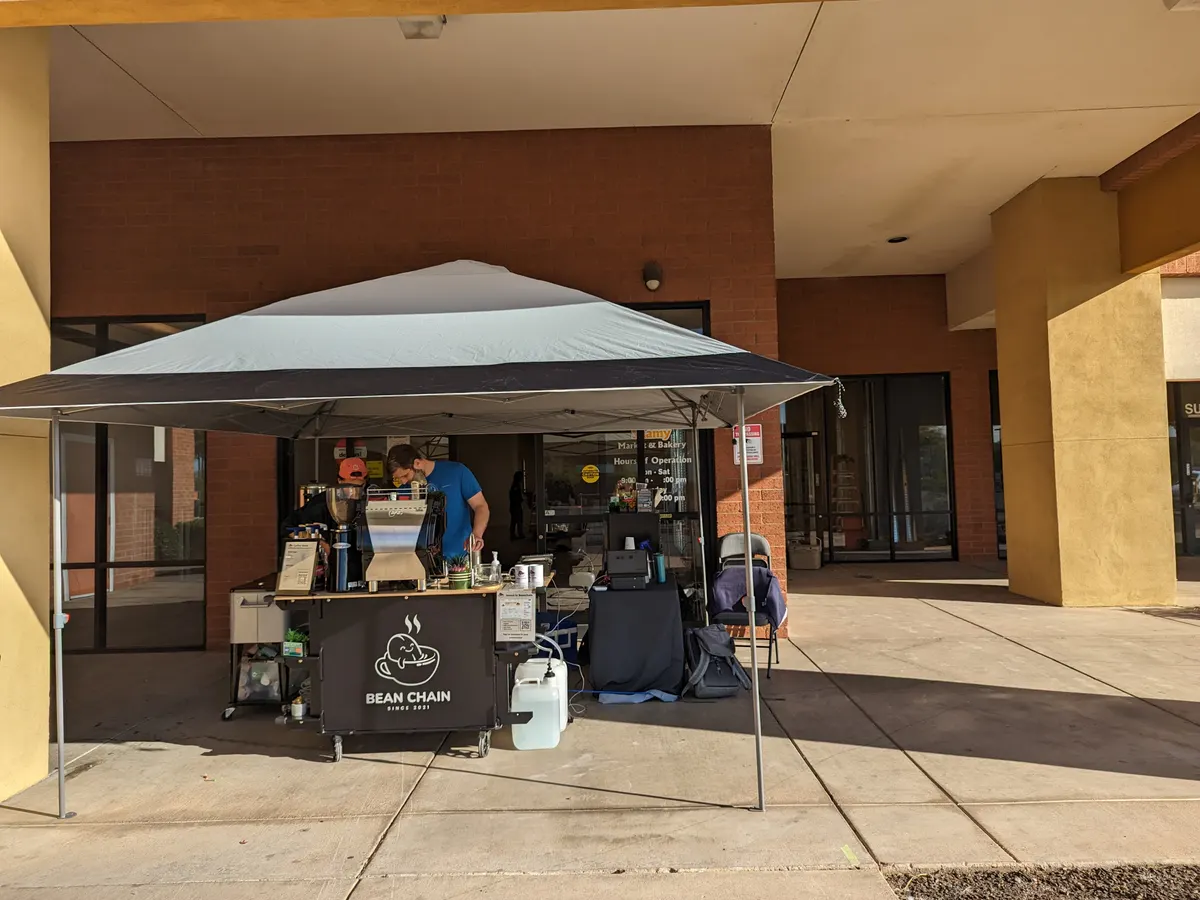
Out front, with the build-out going on behind the glass. 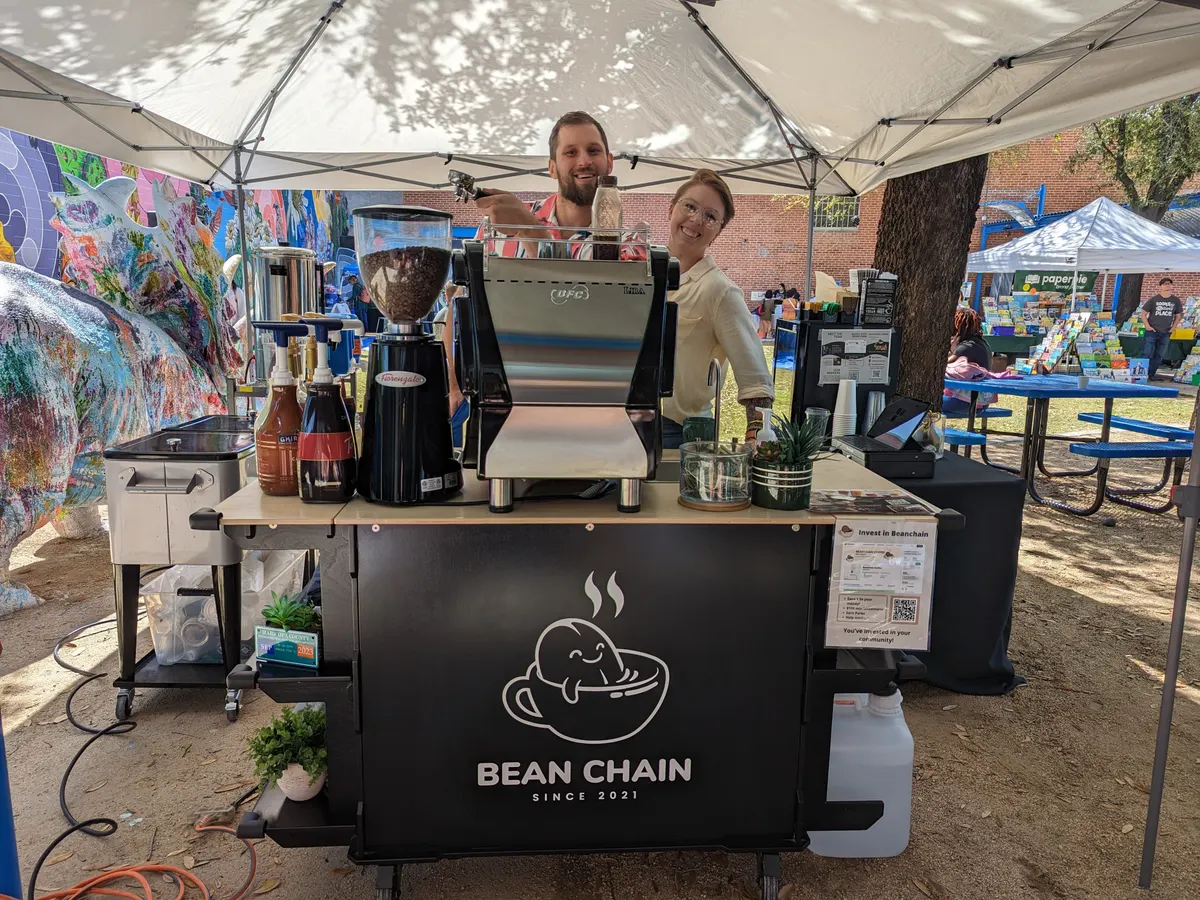
At a market later that month. -
Building it
On March 13 the unit was a shell of metal studs. The sign came in a box three days later and was on the building that afternoon. By May the green banquettes were in, and the library was a row of empty shelves waiting for books.
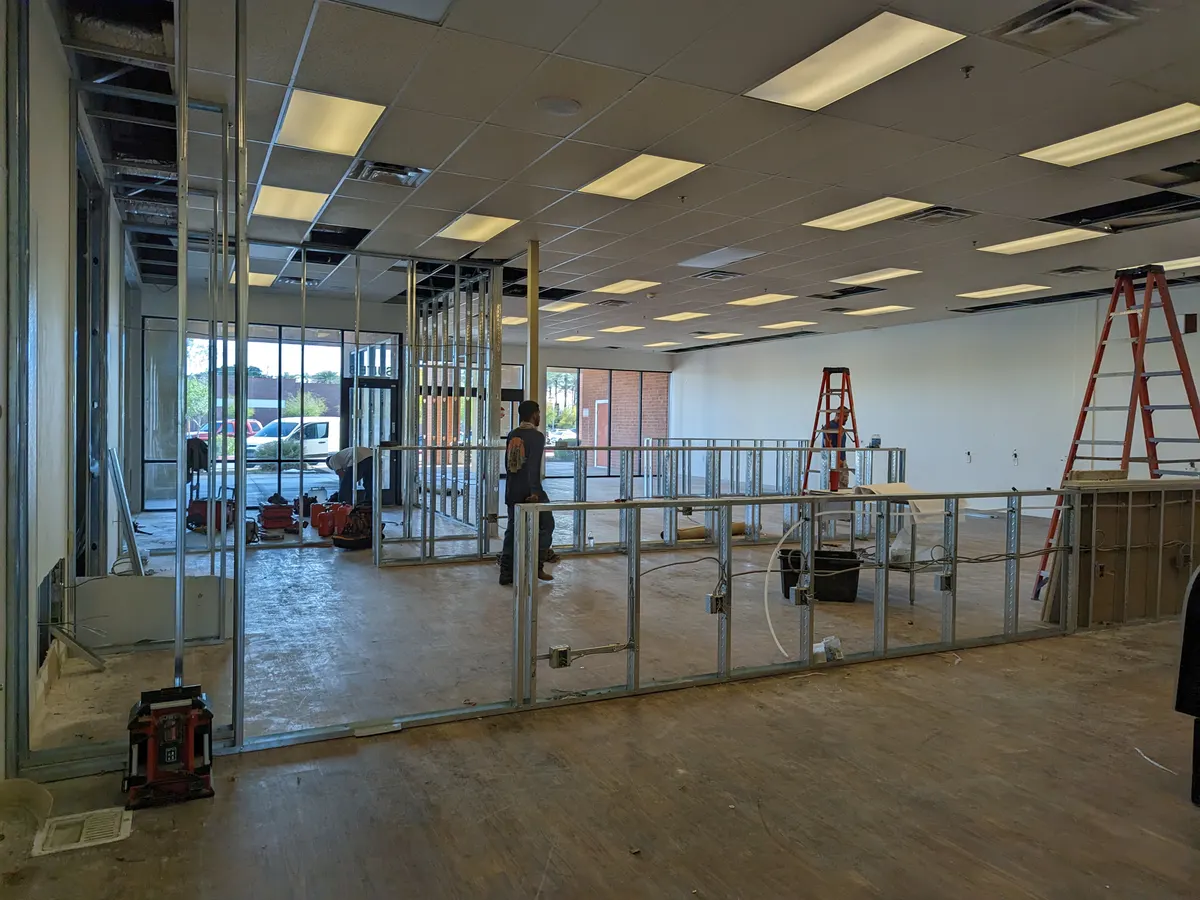
March 13, 2023. 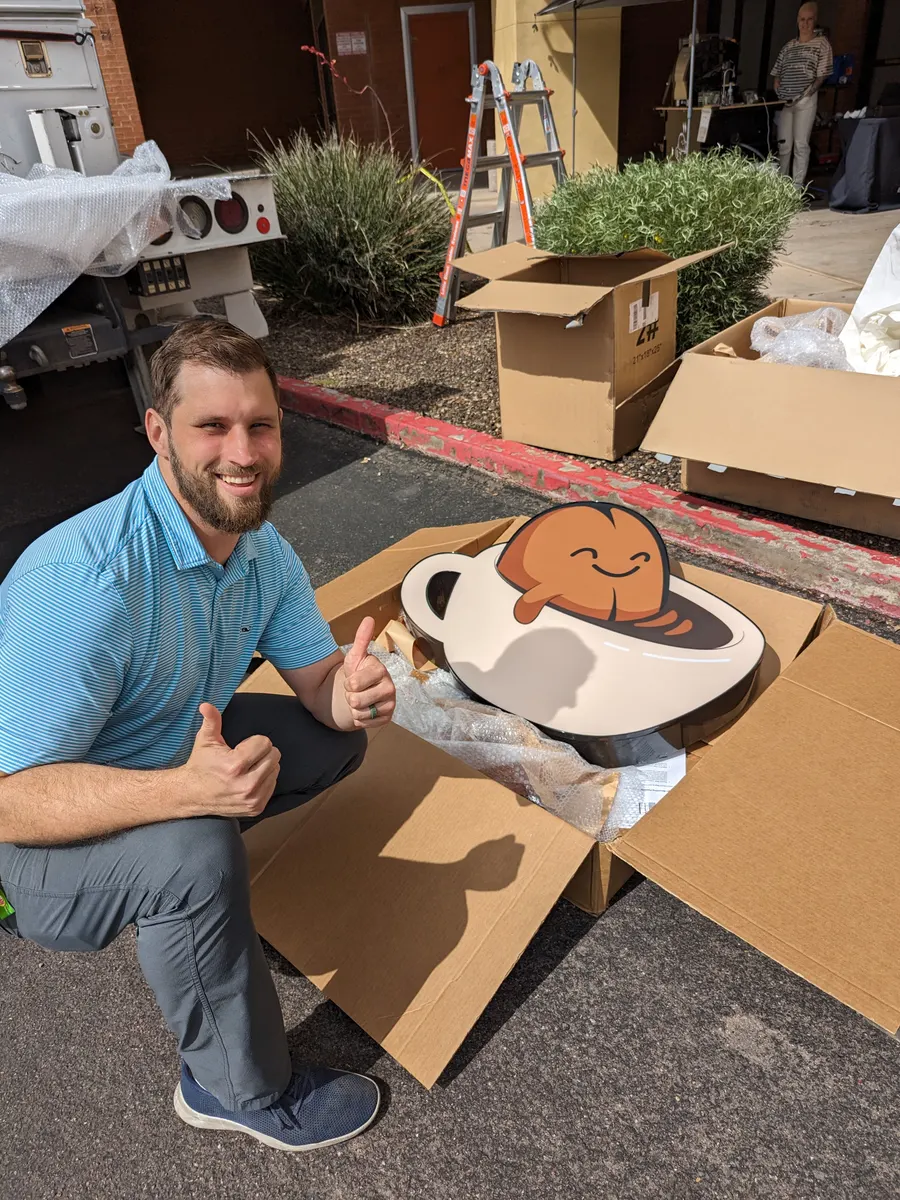
The sign arrives, March 16. 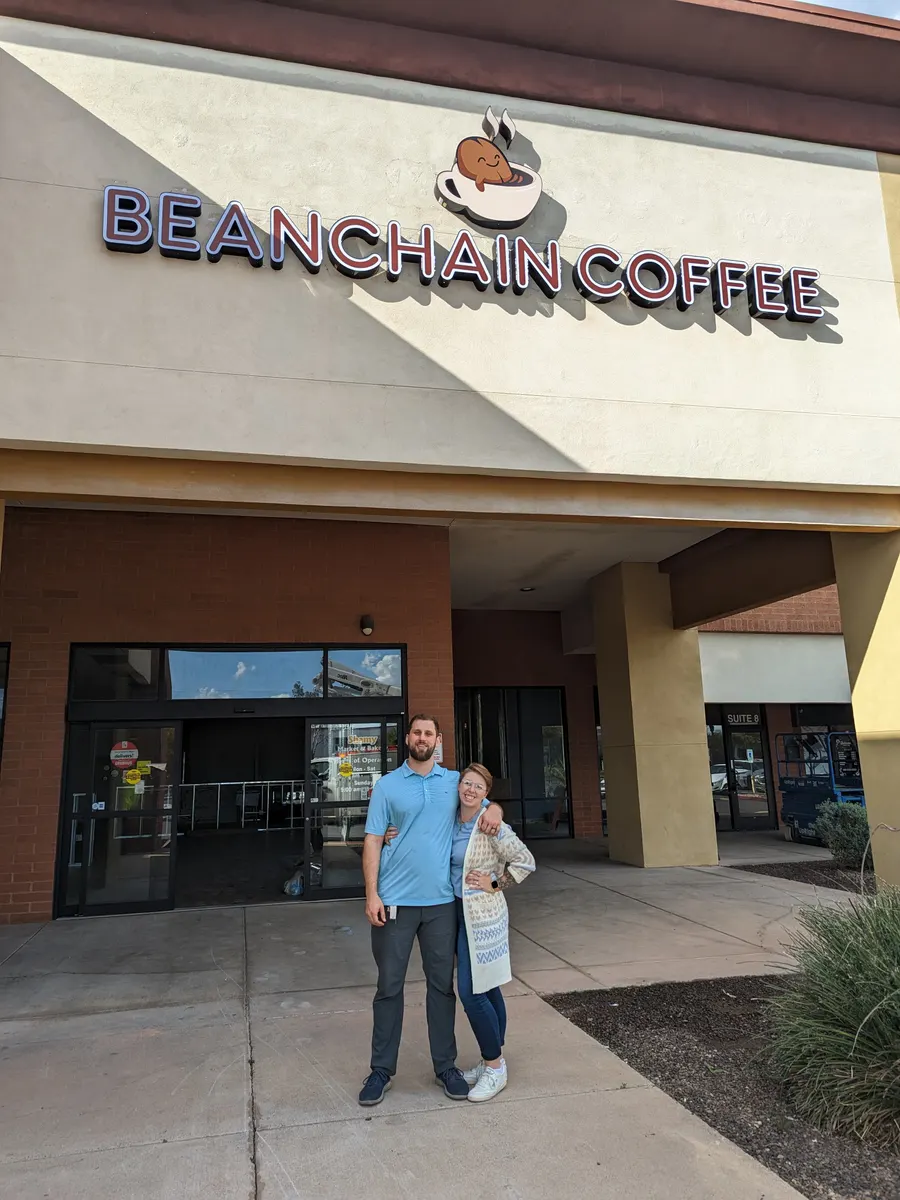
Up by the afternoon. 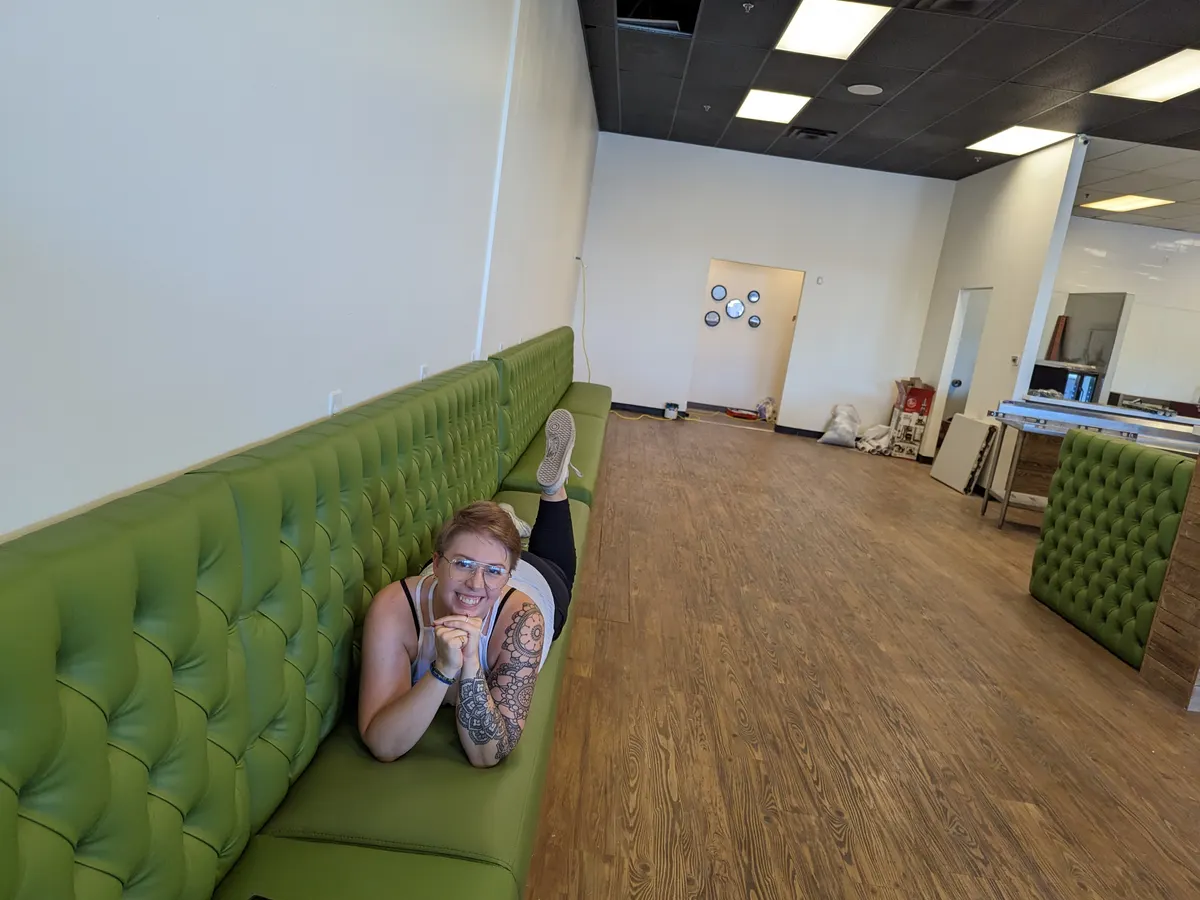
Testing the banquettes, May 2023. 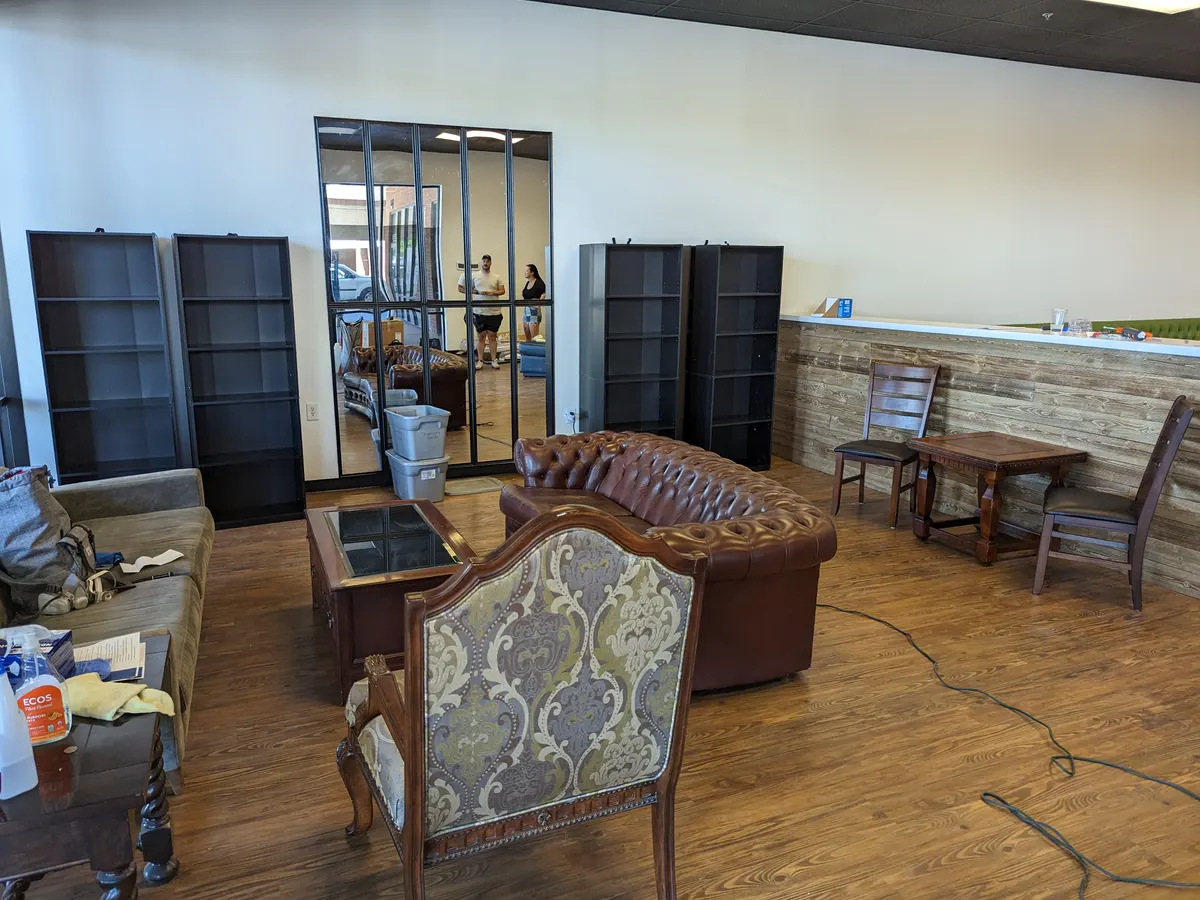
The library, before the books. -
Open
The doors opened in July 2023. By October the booths were busy with people working and the workspace had its first desks. A line from Jean-Luc Picard ran along the wall, and the shop took a table to an event that month, in costume.
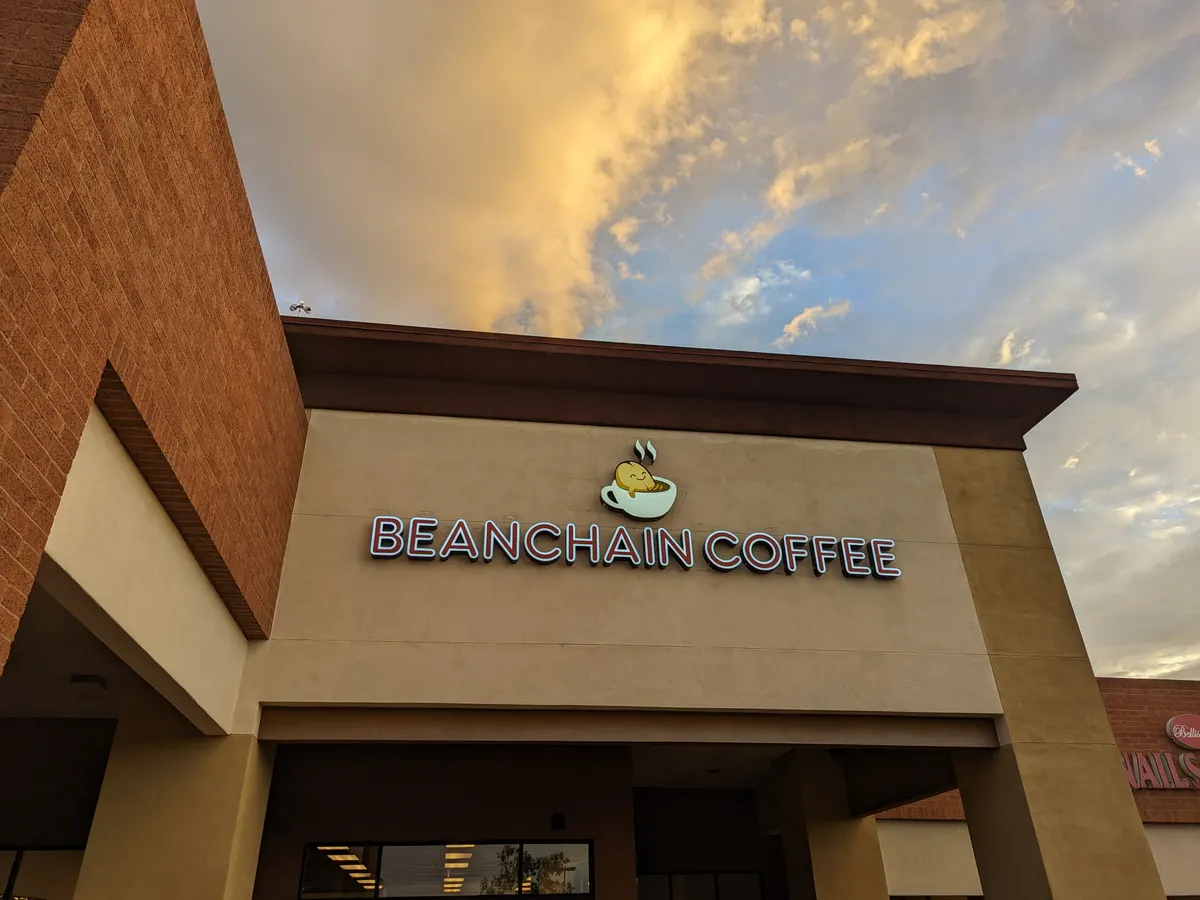
The sign at dusk, August 2023. 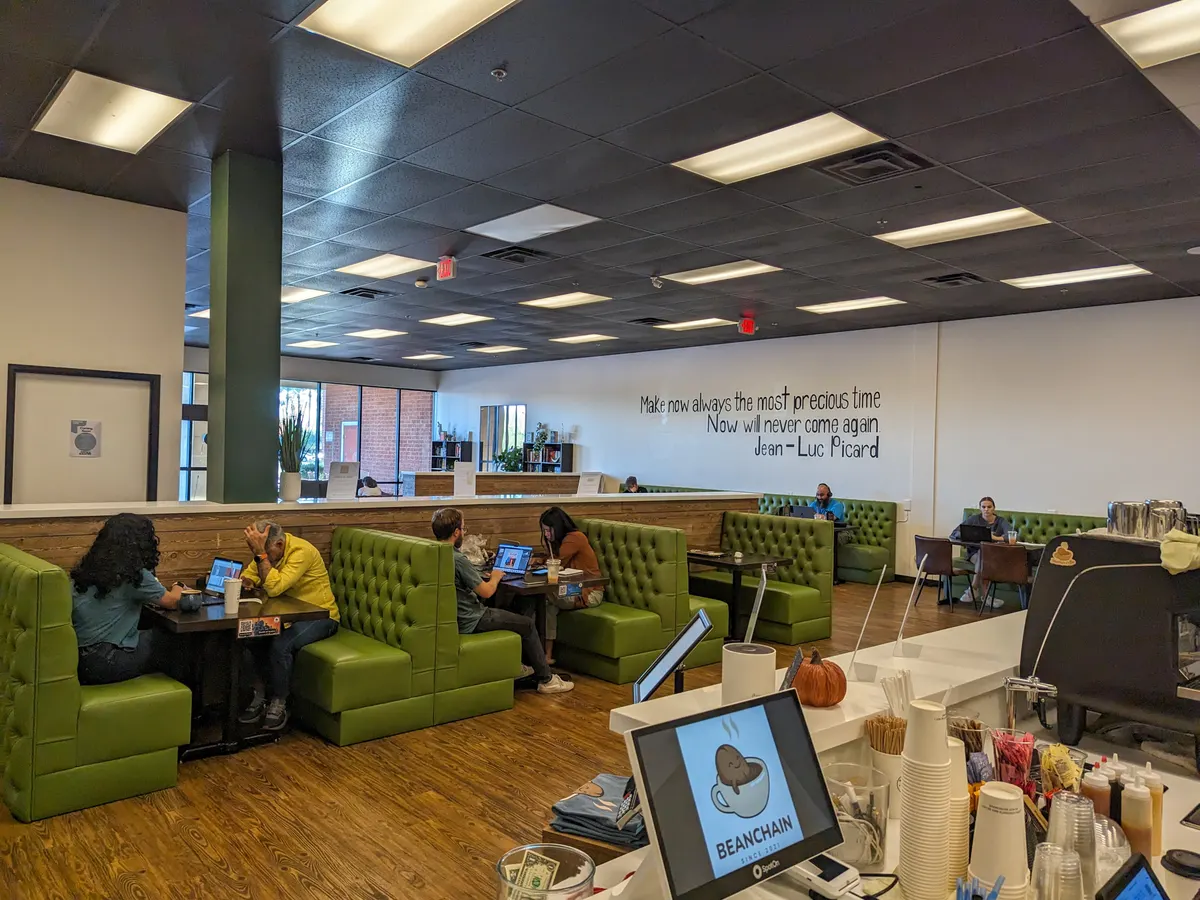
The booths, October 2023. 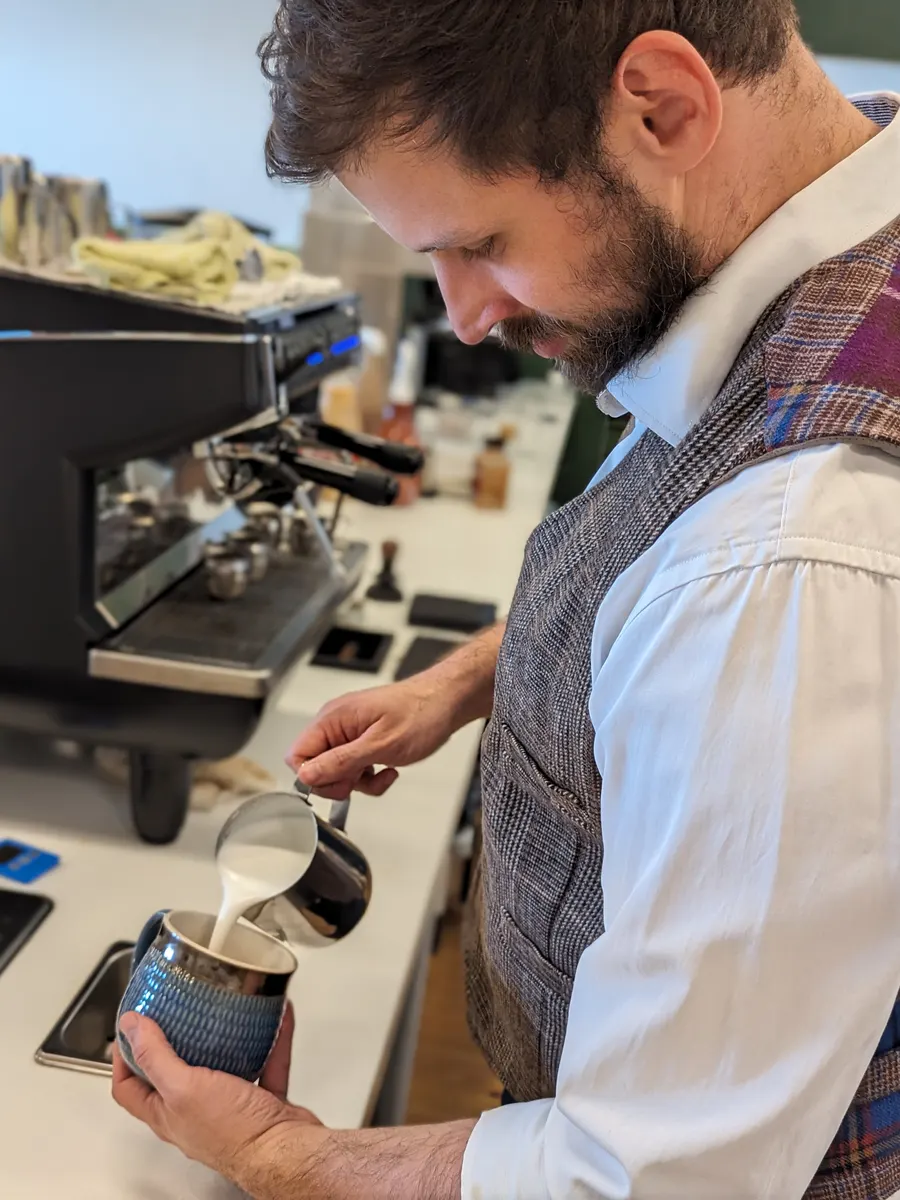
Behind the counter, October 2023. 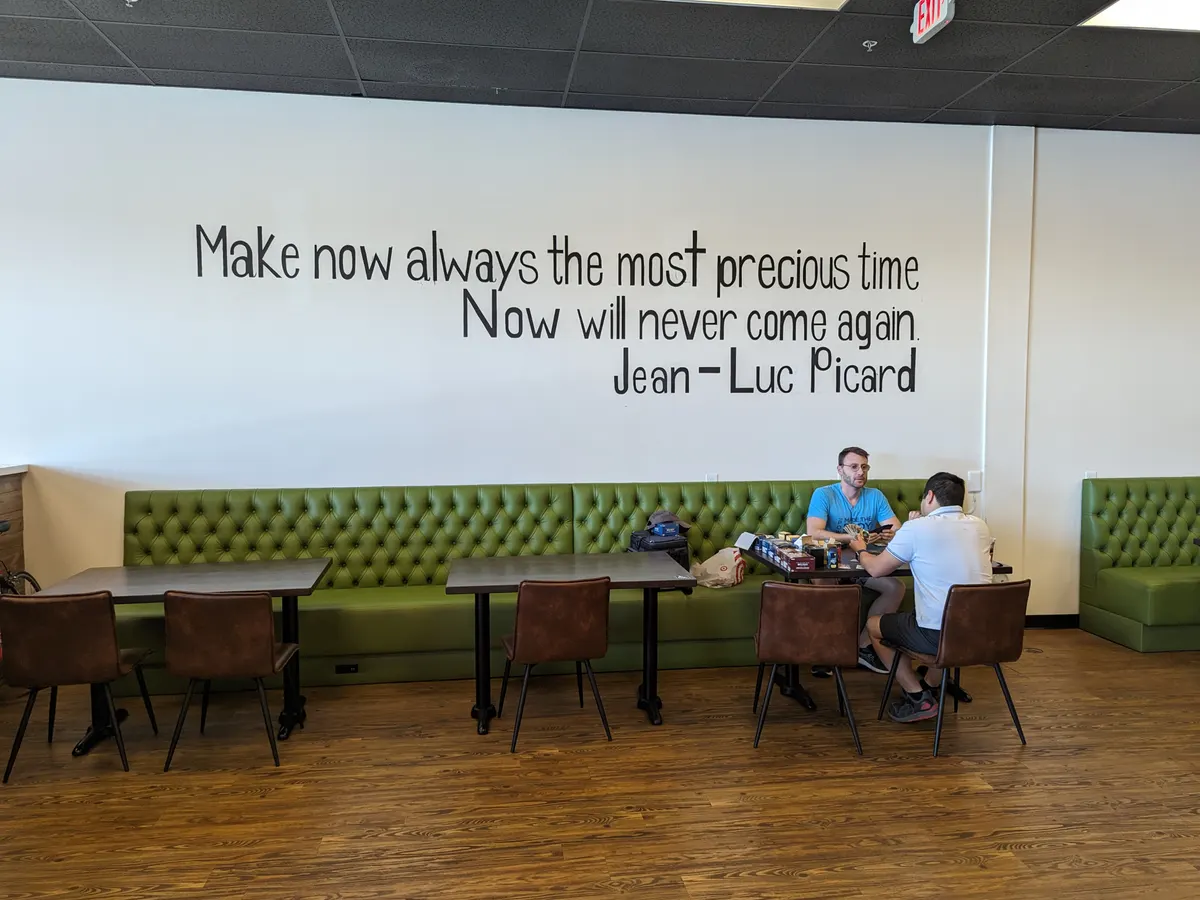
Picard on the wall, September 2023. 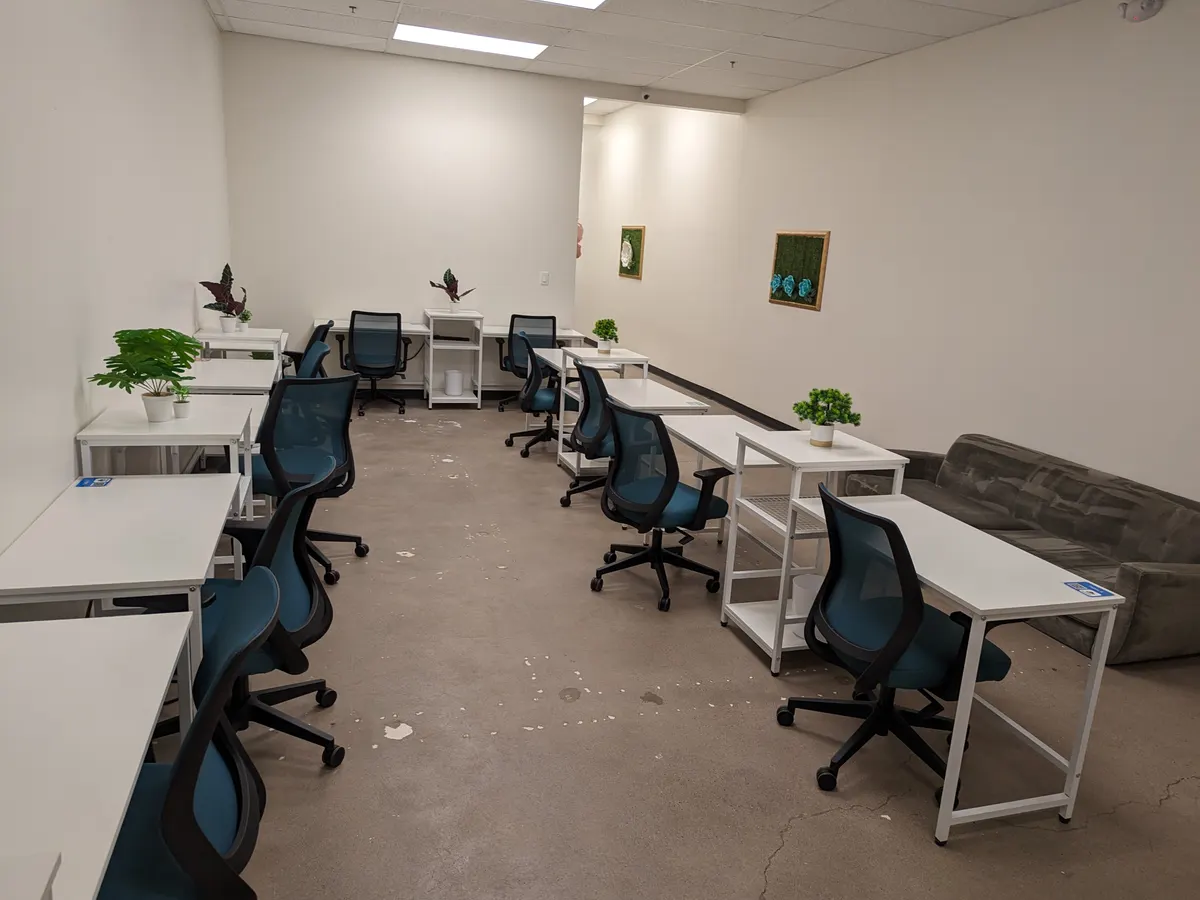
The first workspace desks, September 2023. 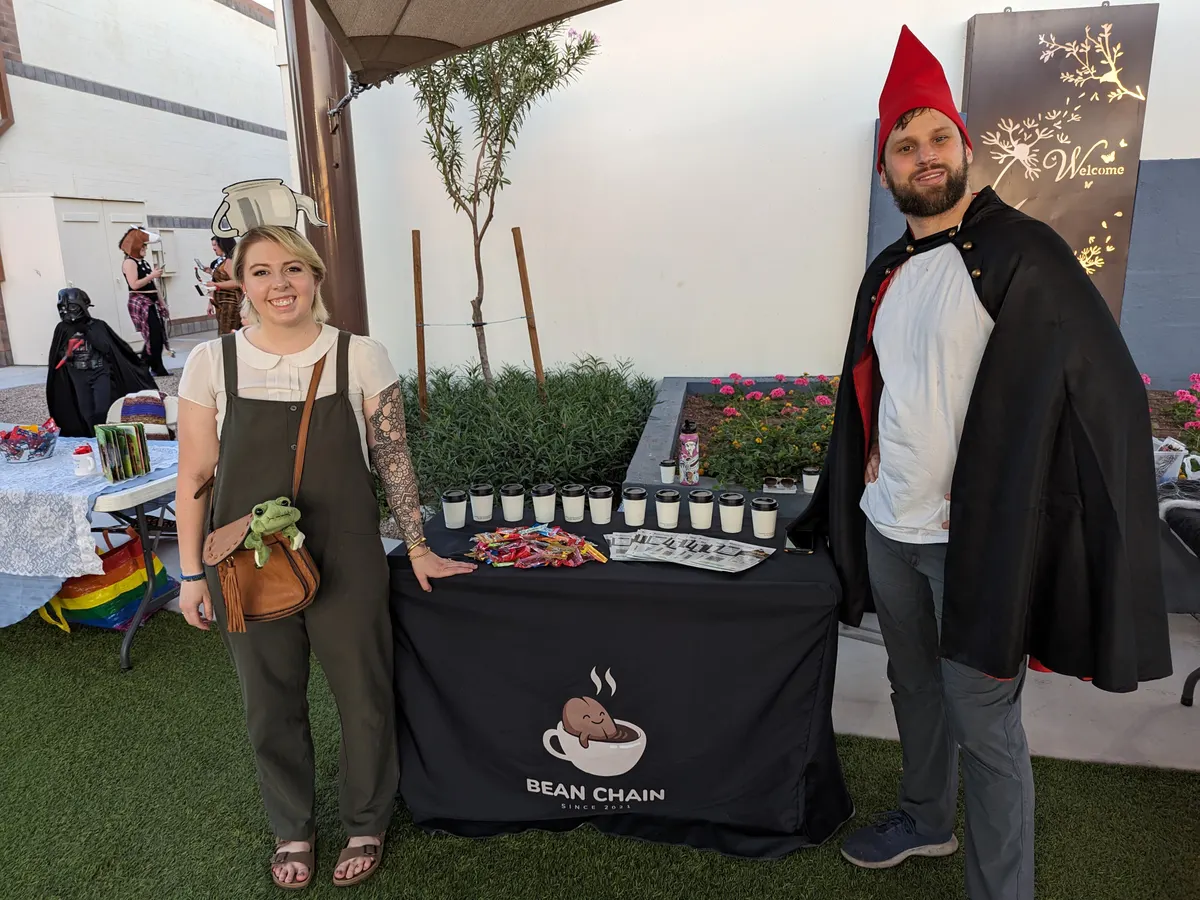
Out at an event, October 2023. -
The mural
By January 2024 the mural was on the wall. The ribbon pattern behind the headings on this site is drawn from it, and the site’s greens were measured from it, along with the foliage wall and the chairs.
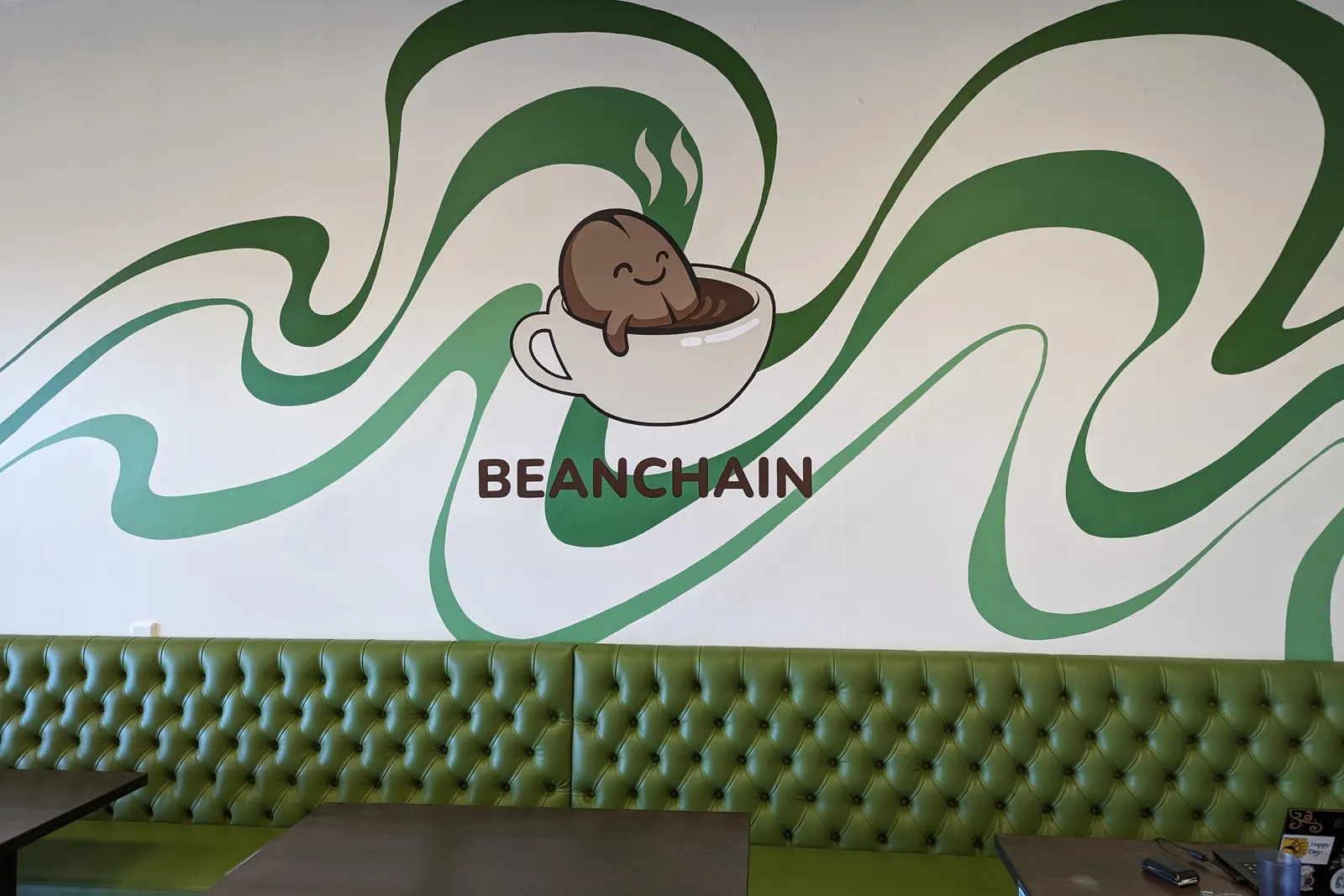
The mural, January 2024. -
A book anyone can write in
The Community Book is a public journal anyone can write or draw in, and it lives in the shop. This is volume one.
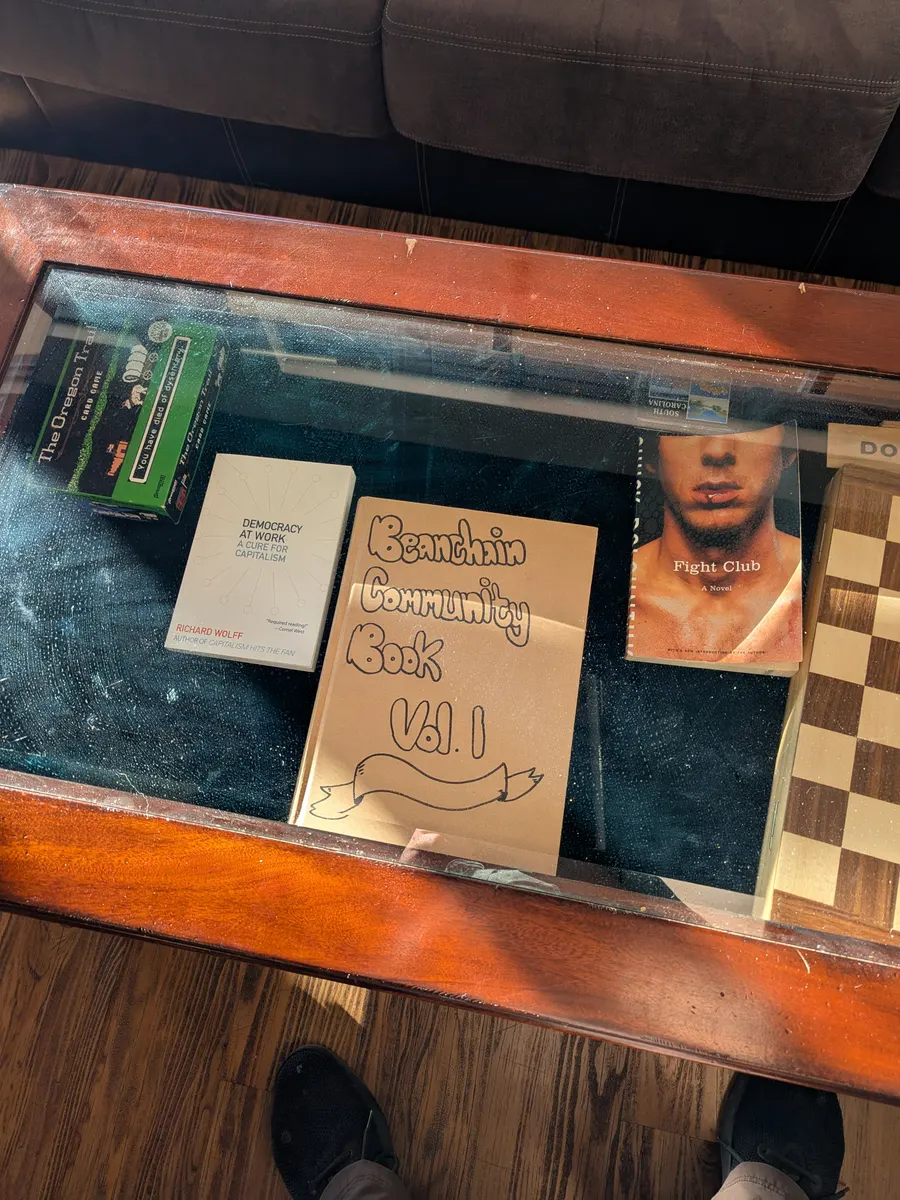
Volume one, November 2024. 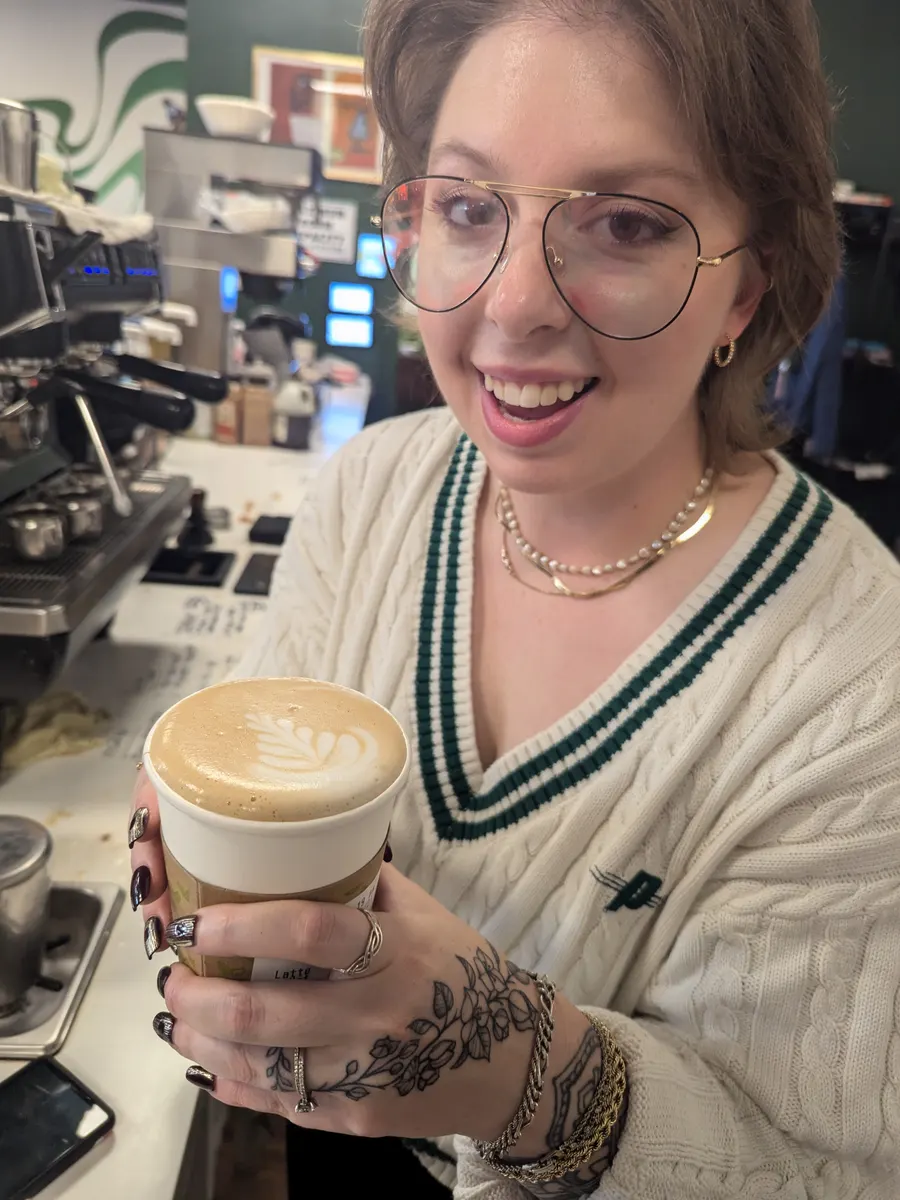
The same month, behind the counter. -
Two years
The shop turned two in June 2025 and threw a 1970s party for it. Chloe did flash tattoos, and local vendors set up for the day.
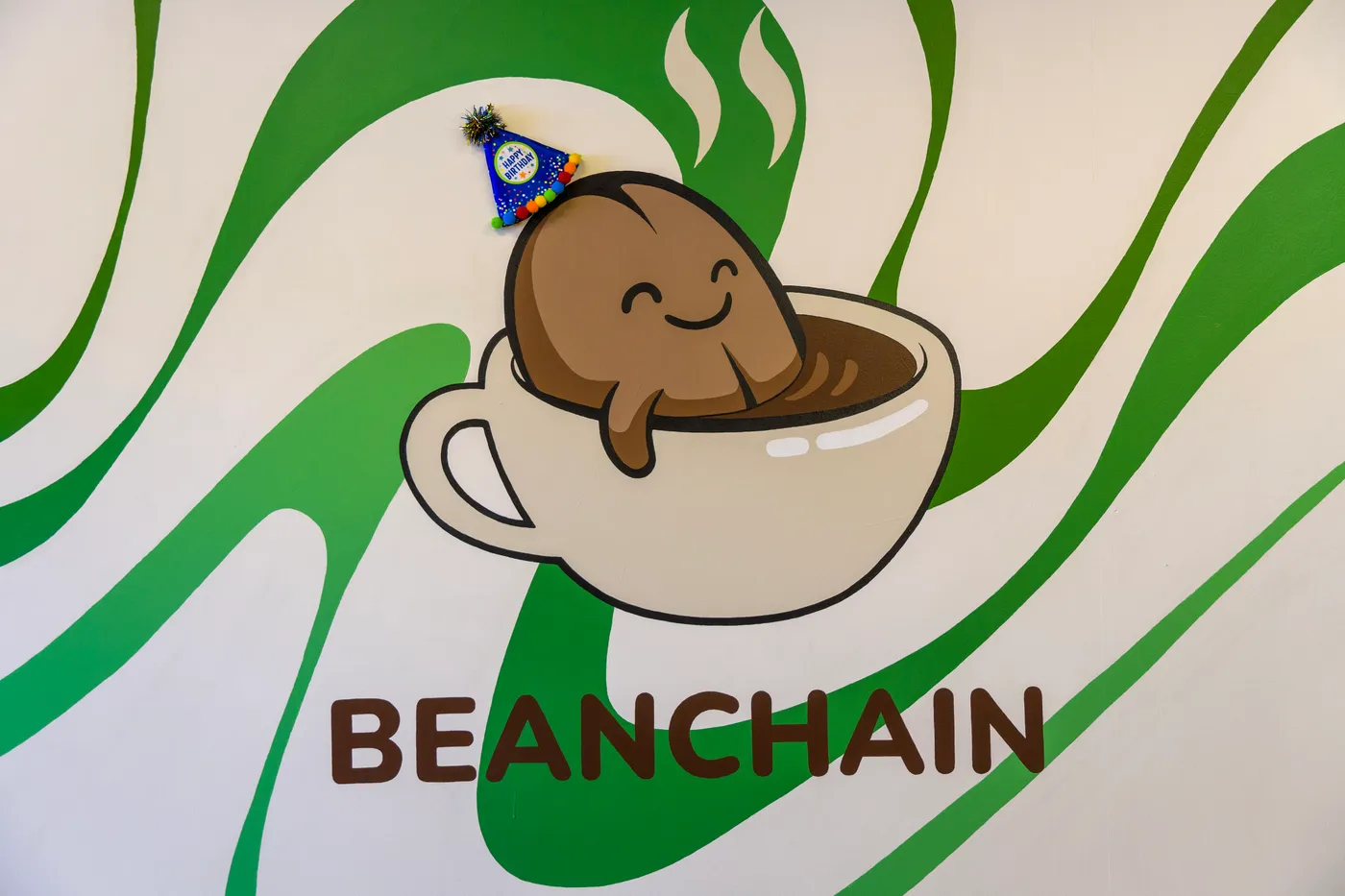
The bean, in a birthday hat.
Our commitments
Commitments to serve people, not profits
Putting the people inside a business ahead of a return to somebody outside it is easy at eight people who all know each other. It is the kind of promise that goes quietly missing at forty, and at two hundred. Both of these will be inconvenient later, and publishing them now, while they still cost nothing, is what makes them worth anything.
Structures serve the people inside them
Not a few at the top. Every structure on this page, including the two that do not exist yet, is supposed to be answerable to the people doing the work in it. A network that ends up extracting from its shops has failed, however well it is performing.
Growth is not automatically good
A system should grow when growing serves the people in it, and not otherwise. There may come a point where the right move is to hold steady, or to get smaller, for the sake of the workers and the neighborhood and the place it sits in. Most businesses cannot say that out loud because somebody is expecting a return. We can, so it is on a public page where it can be quoted back at us.
Progress so far
This is an experiment: we are not there yet
The shop runs, the tools are built and in other people's hands, and the handover to worker ownership is underway rather than done. We are not a cooperative yet: that word arrives with the first members voted in, and the Worker Direction page sets out exactly where we stand against each of the Cooperative Principles. Stages two and three are a plan and a commitment, not a thing you can visit. We would rather you heard all of that from us than found it out, and then we would rather get back to the work.
- The shop runs Done
- The tools are built, and in other people’s hands Done
- The handover to worker ownership Underway
- The first members voted in, which makes us a cooperative Not yet
What you can do today
Buy a meal through PIF Board and somebody collects it from a local business today, with nothing to prove. That one needs no plan at all.
Run your own business differently. Everything we have worked out is free to take, and none of it requires becoming a cooperative first.
Or come in, use the free workspace, and buy a coffee. The shop paying for itself is what keeps any of the rest of this possible.