Most coffee businesses that grow past a handful of shops end up making the same choice, usually without noticing it was a choice. Either the shops stay small and independent, and stay bad at the things a small business is always bad at, or they join something bigger and send it money for the rest of their lives. A franchise is the second option done well. You get a brand and a playbook, and in return a share of every sale leaves town and never comes back.
We want the advantages of being big without the part where the money and the decisions drift to the middle. The plan for that is the second stage of the Beanchain, and it is built out of something we call a Cell.
What a Cell is
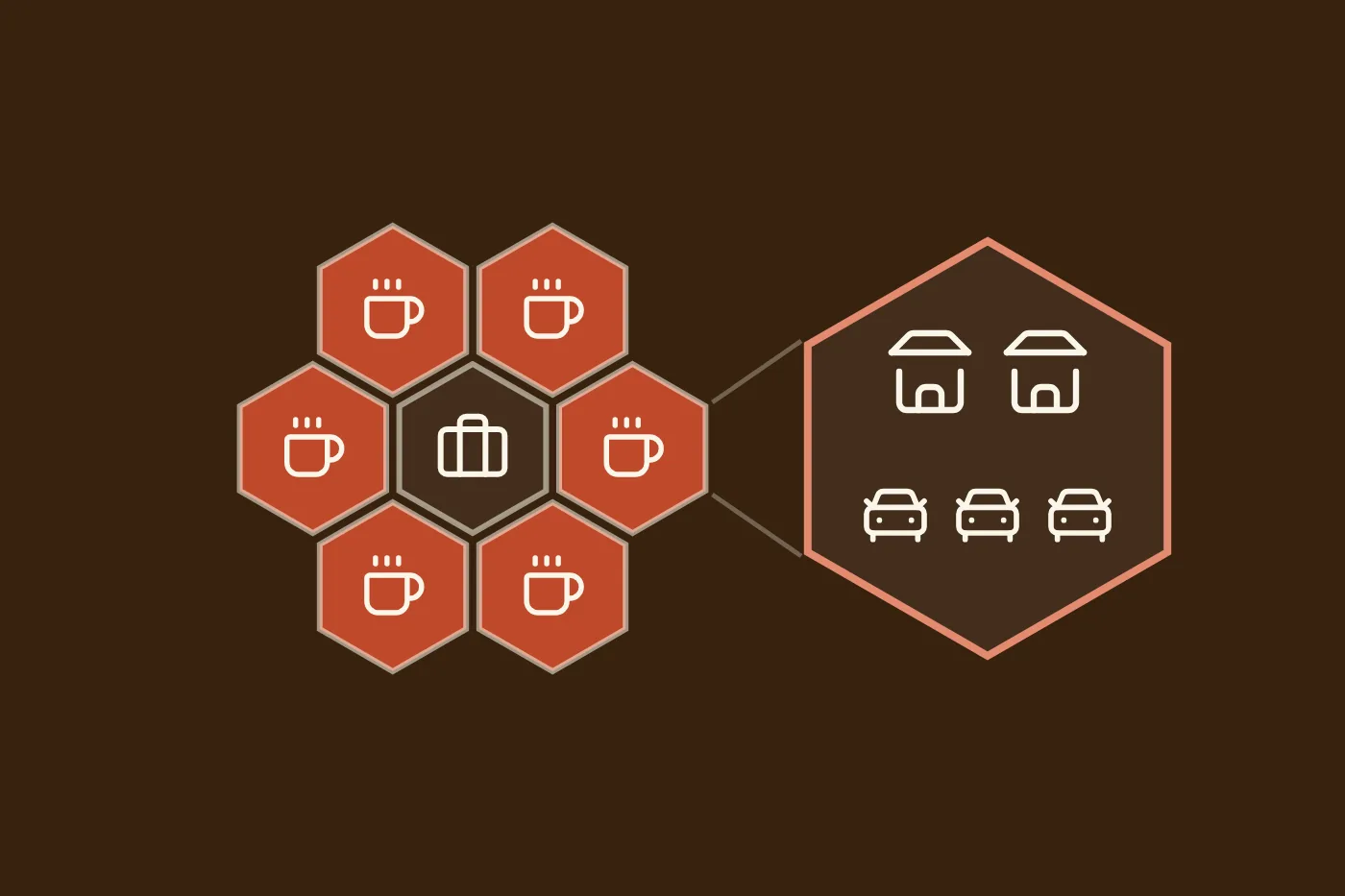
A Cell is several drive-throughs and a couple of larger stores, run together as one cooperative by the people who work in them. The locations decide together and share what they earn.
There is no fixed size. A Cell should be as big as the community around it needs, and no bigger than it can sustain. One might be two drive-throughs and a single big room; another might grow well past that. The test is whether it serves the neighbourhood it sits in and pays its own way while doing it, which is the same test our written commitments set for everything we build: growth is good when it serves the people in it, and not otherwise.
Why drive-throughs
Because they make money. A drive-through is more profitable than a large location like the one we run now, and it can serve far more people in a day.
That matters for reasons that have nothing to do with getting rich. Profit is what pays a living wage and puts something back into the community. It is also what pays for growth, and a plan that needs charity to expand is not a plan anybody else can copy.
Why the big rooms
Because a drive-through cannot do the other half of the job. Our shop on Southern Avenue is a place to share, gather and build a culture. People work from it all day for free, meet clients in it, and fill it for events. None of that fits through a window.
Big rooms are expensive to run, and when a business gets squeezed they are often the first thing to go. Putting them in the same cooperative as the drive-throughs is how we mean to keep them. The drive-throughs earn the margin, and the larger stores spend some of it on being somewhere worth going.
The Network in the middle
The Cells sit around the Beanchain Network, a nonprofit that does the work no single Cell could afford to do well on its own: IT, legal, marketing, the whole back office. It is how a group of small cooperatives gets the advantages a corporation gets from its size.
This is where it parts company with a franchise. A franchise sends money from the shop to the middle forever, in exchange for a brand. The Network takes on work for the Cells instead, so they can grow the way a big corporation does without becoming one, and the money and the power stay in the Cells. Each Cell keeps its own identity, its own rules and its own practices, and signs up only to a short list of commitments held in common.
Why we call them Cells
Cells do a job for the body and also live their own lives, and that is roughly the arrangement. Each Cell is whole on its own. Its people own it and keep what it earns. Together the Cells are strong enough to do what none of them could manage alone, and nobody sits at the top collecting the difference, because there is no top.
The shape is not ours. Mondragon, in the Basque Country, is around 70,000 people across a federation of cooperatives that share finance, training and support between them. It is the best evidence we know of that this works, at a scale we are nowhere near. We are adapting the idea for coffee, not inventing it.
What exists today
None of it yet. Beanchain is one shop in Mesa, and stage one, running it well and handing it to the people who work in it, is still underway. Nobody has been voted in as a member yet, so we are not a cooperative, and there are no Cells. How the Network itself will be governed and paid for is not settled, and we will write it down here when it is.
What we can do now is say the plan out loud, while it costs nothing to promise, so that it can be quoted back at us later. That is why it sits on a public page with “Not built yet” printed beside it.
After the Cells
Once Cells are working, the shared services stop being only ours. The third stage, the Cooperate Network, invites other businesses to build on what the Cells have proved, moving towards being cooperatives, companies owned by their employees, or other businesses centred on the people who work in them and the community around them. That is a story for another post, and a good deal of proof away.