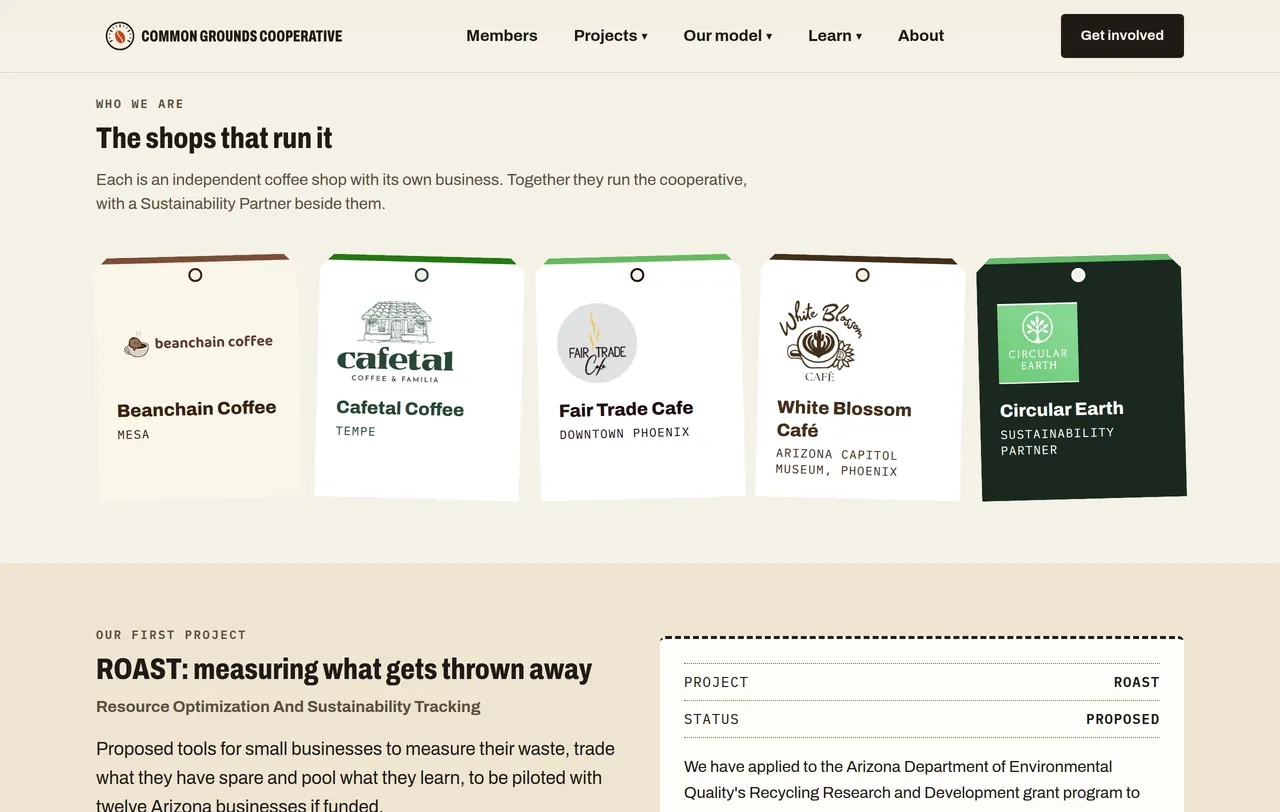
Common Grounds Cooperative is four independent coffee shops: Beanchain in Mesa, Cafetal Coffee in Tempe, Fair Trade Cafe in downtown Phoenix and White Blossom Café at the Arizona Capitol Museum. We started it together this year, and the first problem it is taking on is waste.
It came out of a study
The cooperative grew out of a study all four of us took part in, on how coffee shops go about being more sustainable and what gets in the way. Circular Earth, a sustainability consultancy, led it over ten months, funded by Arizona State University’s Create the Change program. They surveyed business owners around Phoenix, met with coffee shop owners, and mapped the supplies coming into our shops and the waste going out.
When the study ended, we wanted to keep working together, so we formed a cooperative. In August 2026 the four of us drafted its governance and its first circle charters. Circular Earth works beside us as the cooperative’s Sustainability Partner rather than as a member.
Why waste first
In the letter we wrote backing the cooperative’s first grant application, we put it this way:
Waste is a tricky battle for us as business owners. We don’t want to create it, but our hands are tied by tight margins, corporate suppliers, and the waste/recycling/reuse infrastructure provided to us.
A coffee shop throws out a lot that is worth something to somebody: grounds a farm can use, cardboard and aluminum that have a buyer, food that could still be eaten. Without a record of how much of each there is, one shop cannot show that a new pickup service would pay for itself, and four shops cannot go to a hauler together. The same letter says it in a line: “We cannot change what we can’t clearly measure.”
ROAST, if the grant comes through
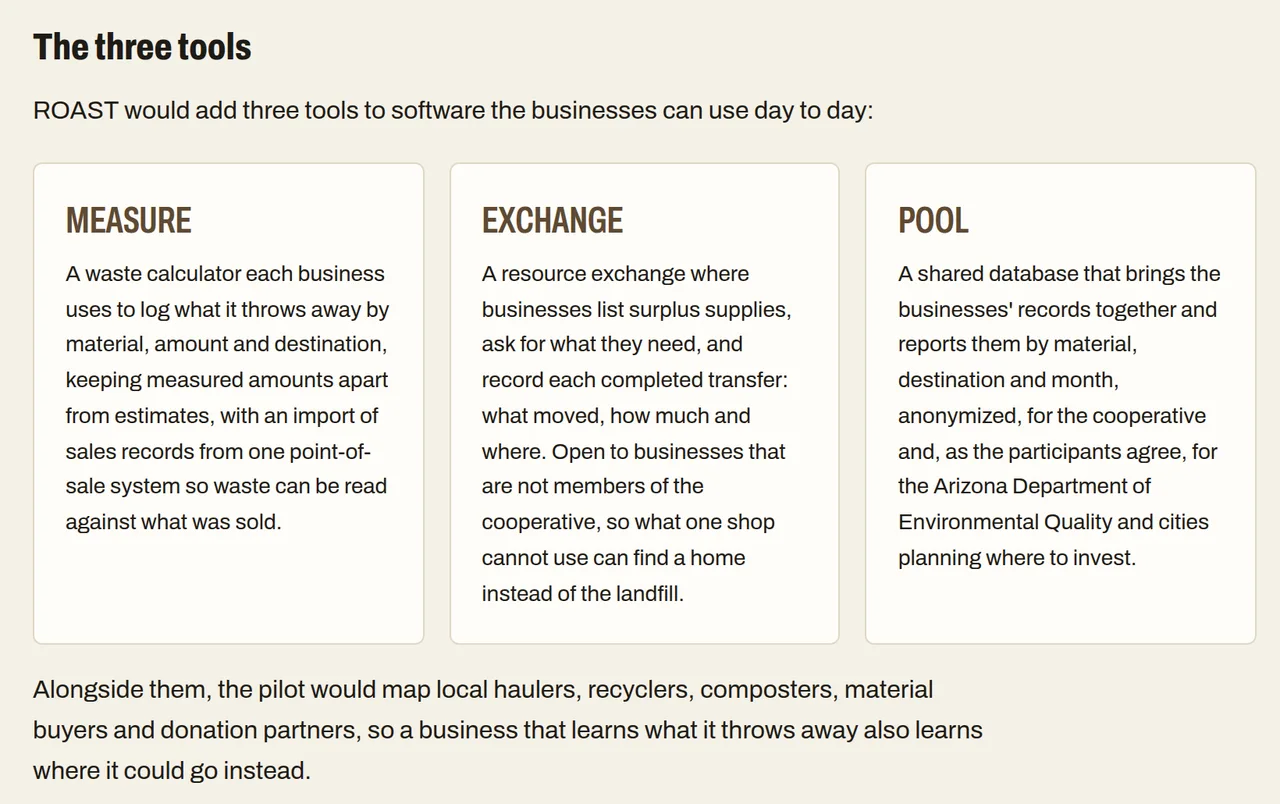
The cooperative’s first project is a pilot called ROAST, short for Resource Optimization And Sustainability Tracking. It would put three tools into software small businesses can use every day:
- Measure logs what each business throws away, by material, amount and where it went, and reads it against what was sold.
- Exchange is where a business lists the supplies it has spare and asks for what it needs. Shops outside the cooperative can use it too.
- Pool brings everyone’s records together, anonymized, by material, destination and month, for the cooperative and, where the businesses agree, for the state and for cities.
This is how the cooperative’s own site lays them out:
Twelve Arizona businesses would test them: the four of us, and businesses recruited through local networks and referrals. Circular Earth would coordinate the pilot, bring the method for measuring waste, and lead the outreach. The tools would be built on Handbook, the operations software we make here at Beanchain, and that work is part of the proposal.
To be plain about where it stands: ROAST is proposed, not funded. The cooperative has applied to the Arizona Department of Environmental Quality’s Recycling Research and Development grant program, and the application is still pending. The pilot starts only if it is funded, and would then run for about six months. Until then, nobody can be promised a place in it.
How it is run
Common Grounds is organized in circles, small groups that each look after one area of the work. Under the draft governance, a shop joins as a contributor and becomes a Member by serving in a circle. It is not a legal entity yet: we are still choosing the form that will make the ownership formal, and dues have not been set.
If you run a coffee shop in Arizona
Get in touch. The cooperative’s Get involved page has a short form, and a Member will reply by email within a week to ask about your business and what you are looking for. Telling us costs nothing and commits you to nothing.
The cooperative is starting with independent coffee shops, and restaurants and other food businesses are part of the plan once that works. Farms, composters, recyclers, funders and city offices can work with it as partners, and anyone who wants to help can volunteer. The same page is the place to start.