
Our shared workspace is free because the people who do the work here decided it should be. We are a worker directed coffee shop, and charging for a chair is a strange way to run one.
A free desk sounds as though it ought to come with a catch, so it seemed worth writing the reasoning down.
What free means here
There is no day rate. There is no membership, no application and no waiting list. You do not book a desk for everyday working. You walk in, buy a coffee, and the desk is yours for the day.
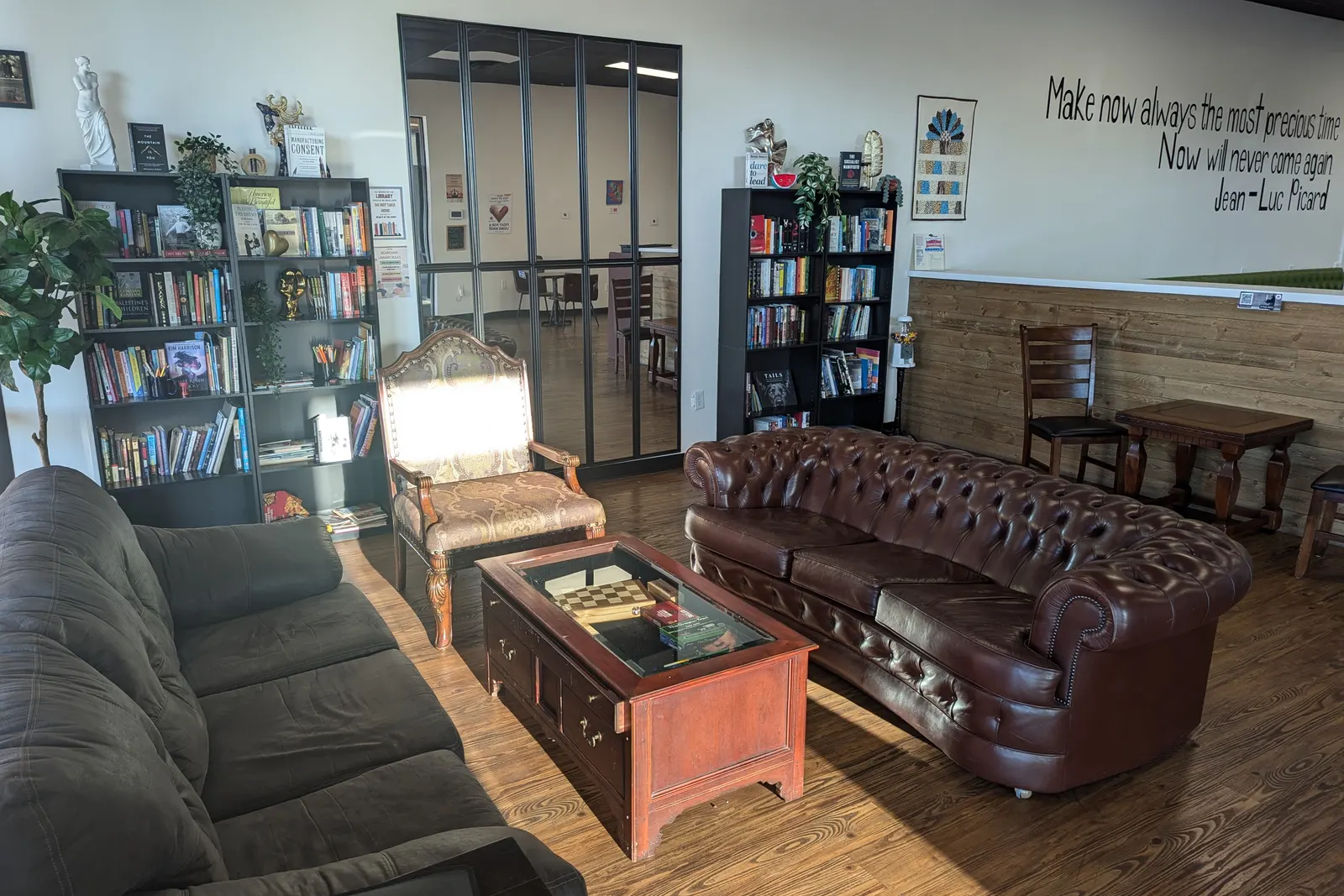
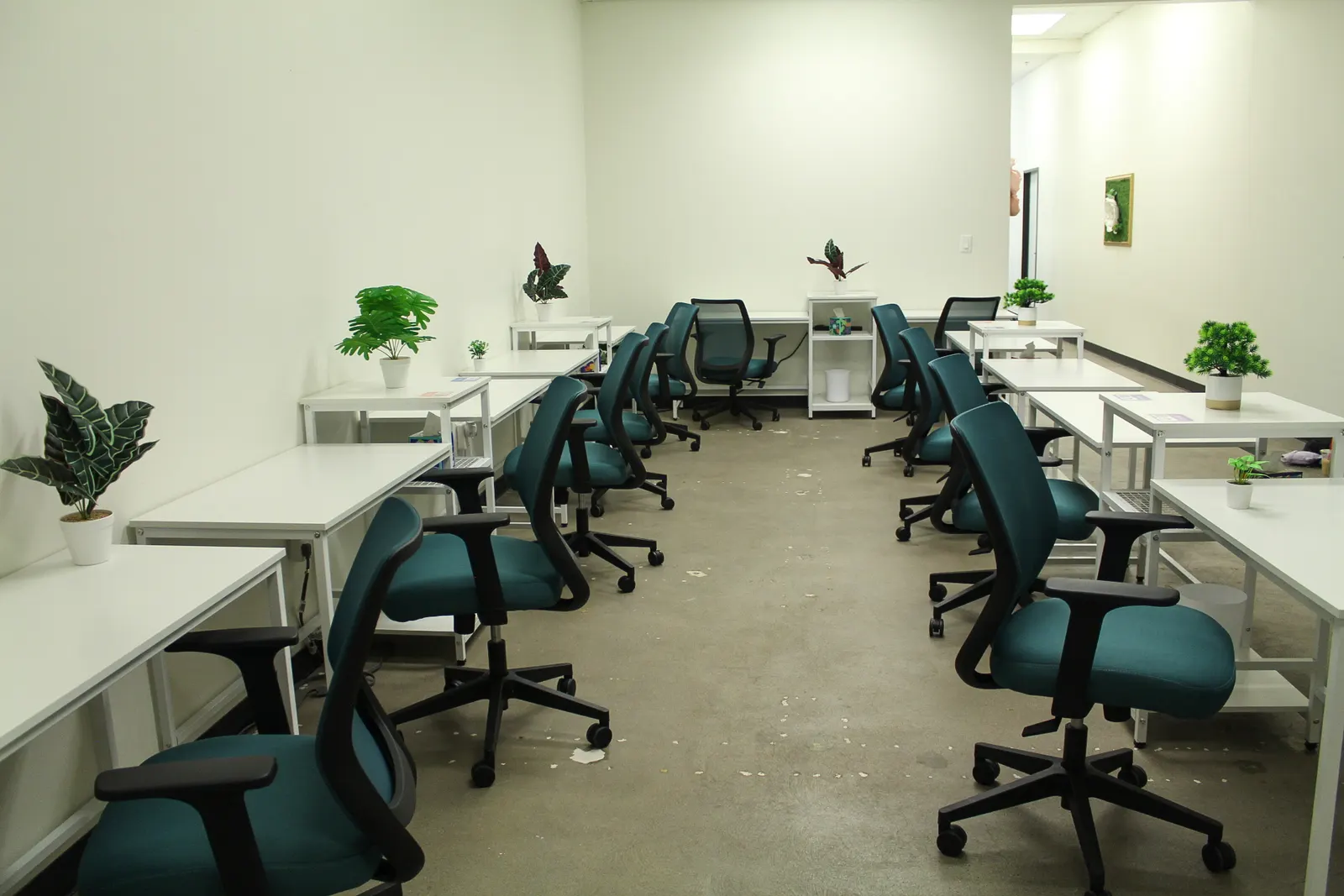
The room itself is a real workspace rather than a few cafe tables with a sign on them. It has full-size desks and proper chairs, fast WiFi that handles video calls, power at nearly every seat and a printer. The whole menu is served all day, and there is a library and a shelf of board games for the breaks.
The trade
We are a coffee shop. We sell coffee and food, and that is how the room pays for itself. Plenty of places will sell you a desk by the day. We would rather sell you a coffee and let the desk be the reason you came.
That is why we ask two things of the people who use it. If you are settling in for the day, buy a coffee. And please do not bring outside food or drink in. A room this size costs money to keep open, and it earns nothing directly. It keeps working because the people who use it are also our customers. Buying something here keeps the room available to work and study in, and it keeps us moving on the work we are doing against poverty.
Who gets the room
A paid desk sorts people before they walk in. Whoever can afford the day rate gets a desk, and everyone else works at the kitchen table, or in the car, or not at all.
A free desk does not sort anyone. Students, freelancers, people between jobs and anyone whose home is not a workable office all get the same room, on the same terms. Somebody writing a dissertation can sit next to somebody applying for jobs, and neither of them paid more than the price of a coffee to be there.
That is a deliberate decision about who gets a place to work. It is not a promotion.
Why worker direction leads here
Worker direction is how the shop is run. It is our approach to building a workplace that prioritises democracy, participation, proper incentives and mutual respect, and it draws on the seven Cooperative Principles. The aim is to give the people who work here genuine influence over the decisions that affect their work and their community.
The workspace is one of those decisions. The question was what the room should be for, and the answer the people doing the work came to was that it should be open. To us that fits what the business is for. A shop working towards the end of poverty has no business charging people who are short of money for a place to sit down and work.
There is more on how the shop is run on our worker direction page, and on what the business is trying to do in our mission.
The same idea, elsewhere in the room
The library works on the same principle. Every book on its shelves was donated, and there is one condition on a donation: tell us why you like the book. If there is not a reason, we would rather you kept it. The books stay in the shop, so they are there for the next person who wants one.
There is also a community book on the shelf that anybody can write in or draw in. Nobody edits it and nobody curates it. Like the desks, it belongs to whoever turns up and uses it.
What we would ask of you
Use the room. Buy a coffee when you settle in, and lunch if you are there over lunch. And if you know somebody who needs a desk and does not have one, tell them it is here.
The workspace page has the photographs and the practical answers. If you are deciding whether we suit the way you work, free coworking in Mesa sets out what the desk gets you and what it does not, and our guide to the best coffee shops to work remotely in Mesa compares us with four of our neighbours.