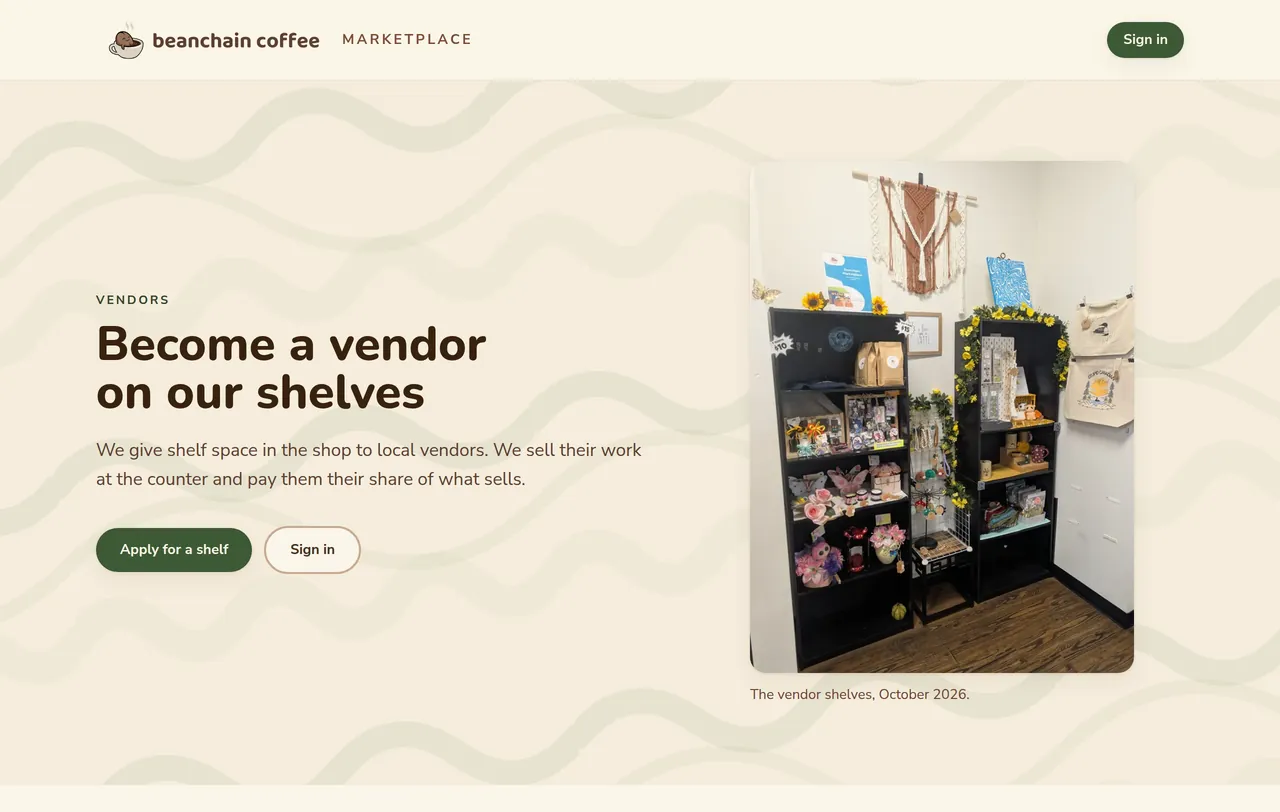
Inside Beanchain, local vendors sell their work from our shelves: crochet animals, candles, jewelry, prints, tarot cards and press-on nails. About four vendors are on them right now, most with about two shelves each, and we add shelves as we need them. There is no rent for a shelf. We sell their work at the counter, and when something sells, the shop keeps a share and the rest is the vendor’s.
Between 50 and 150 sales a day come off those shelves. Until recently, we kept track of every one of them with two Google Forms, a spreadsheet and what people remembered.
How it used to work
A vendor applied through a Google Form. Once they had a shelf, they filled in a second form each month to show they had kept their side of the deal, which is posting about their shelf twice a month and keeping it stocked. Their sales went through the shop’s till along with the coffee. At the end of the month, somebody worked out what each vendor was owed and paid them by hand.
It worked, but it leaned on people. Somebody had to remember to check the forms, and the month’s sums were only as good as whoever did them.
What we built instead
We wanted selling here to be easier for vendors and more reliable for all of us, so we built the Beanchain Marketplace. Vendors and staff both sign in to it, and it holds the whole arrangement in one place.
A vendor applies there, and we read the application. If we say yes, they read the vendor agreement and accept it online, connect their bank through Stripe so they can be paid, and list what they sell with a name and a price. Then we book them shelf space and they bring their work in.
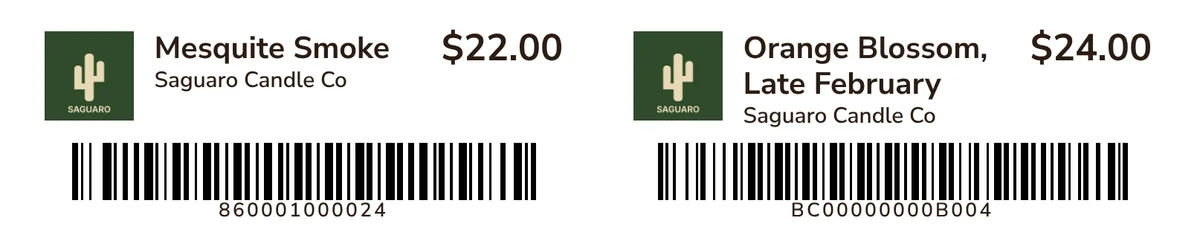
From that list, a vendor can print their own labels on an ordinary sheet of address labels. Each one has their logo, the product’s name, their business name and the price, with a barcode if they want one.
At the counter, staff ring vendor items up on a register we built into the marketplace. It scans the barcode or finds the product by name, and it takes cash or a card on a Stripe card reader.
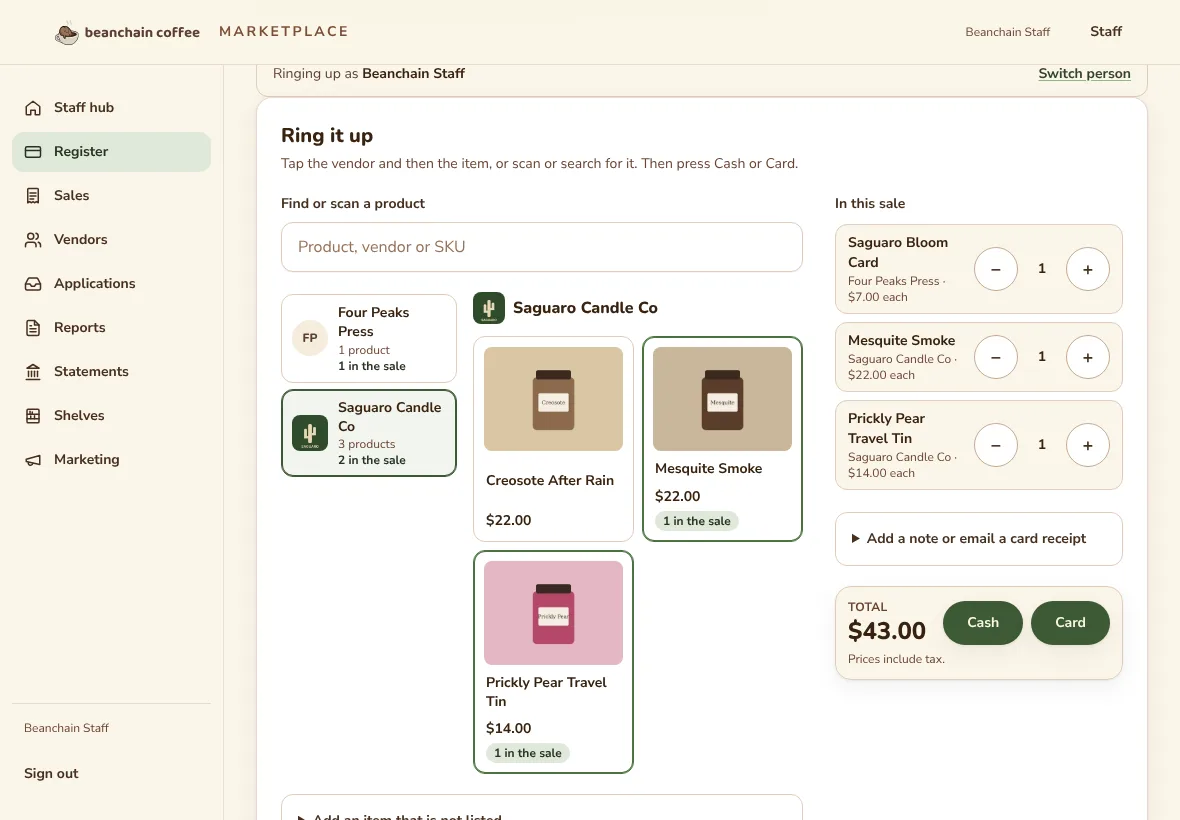
The vendors in these pictures are made up. They are the ones we test the software with, because nobody has asked our real vendors whether they want to be shown.
At the end of each month, every vendor gets a statement of what sold, and their share goes straight to their bank through Stripe, their share of cash sales included. The price on the tag is what the customer pays. Sales tax and card fees come out of the shop’s share, never out of the vendor’s.
Vendors still tell us about their month, but in their own account now: links to their two posts, a photo of their shelf, and whether they restocked. In return, they can see what has sold this month, what their share comes to so far, and every statement, whenever they like.
Built for more than one shop
We had one more reason. Everything in the marketplace, from a vendor to a sale to a statement, belongs to a host, and Beanchain is the first one. We built it that way so other businesses could one day host vendor shelves of their own on it, and a vendor who does well with us could sell in more places without starting over.
That part does not exist yet. No other business hosts shelves on it, and there is nothing to sign up for. It is why the software is shaped the way it is, and something we would like to grow into.
If you make things
The marketplace’s front page says how it works, who shops here, how the money splits and whether we are taking new vendors right now. About 400 people come through the shop on a normal day, and work priced between $5 and $15 sells best. Have a look at marketplace.bchain.coffee.
If you only came in for coffee, have a look at the shelves next time you are in.