
The board on our wall worked. Somebody paid for a meal in advance, we put a card up, and whoever needed it took the card down and ate. No form, no queue, nobody asking what had gone wrong in your life.
Across the life of that pilot, around six hundred meals were paid for. I cannot tell you how many were eaten, and that is the honest problem with it. Part of the record was a stack of receipts and a person’s memory, so the number exists somewhere between “hundreds” and “we are not certain”. If you are going to ask people to fund something, being unable to say what happened to their money is not a small flaw. It was the second reason to build software. The first was simpler: the board only worked if you were standing in front of it, in one shop, in Mesa.
We wrote up how to run the corkboard version back when that was the whole method, and it still holds if that is what you want. This is about what replaced it.
Somebody pays, somebody eats, nobody explains themselves
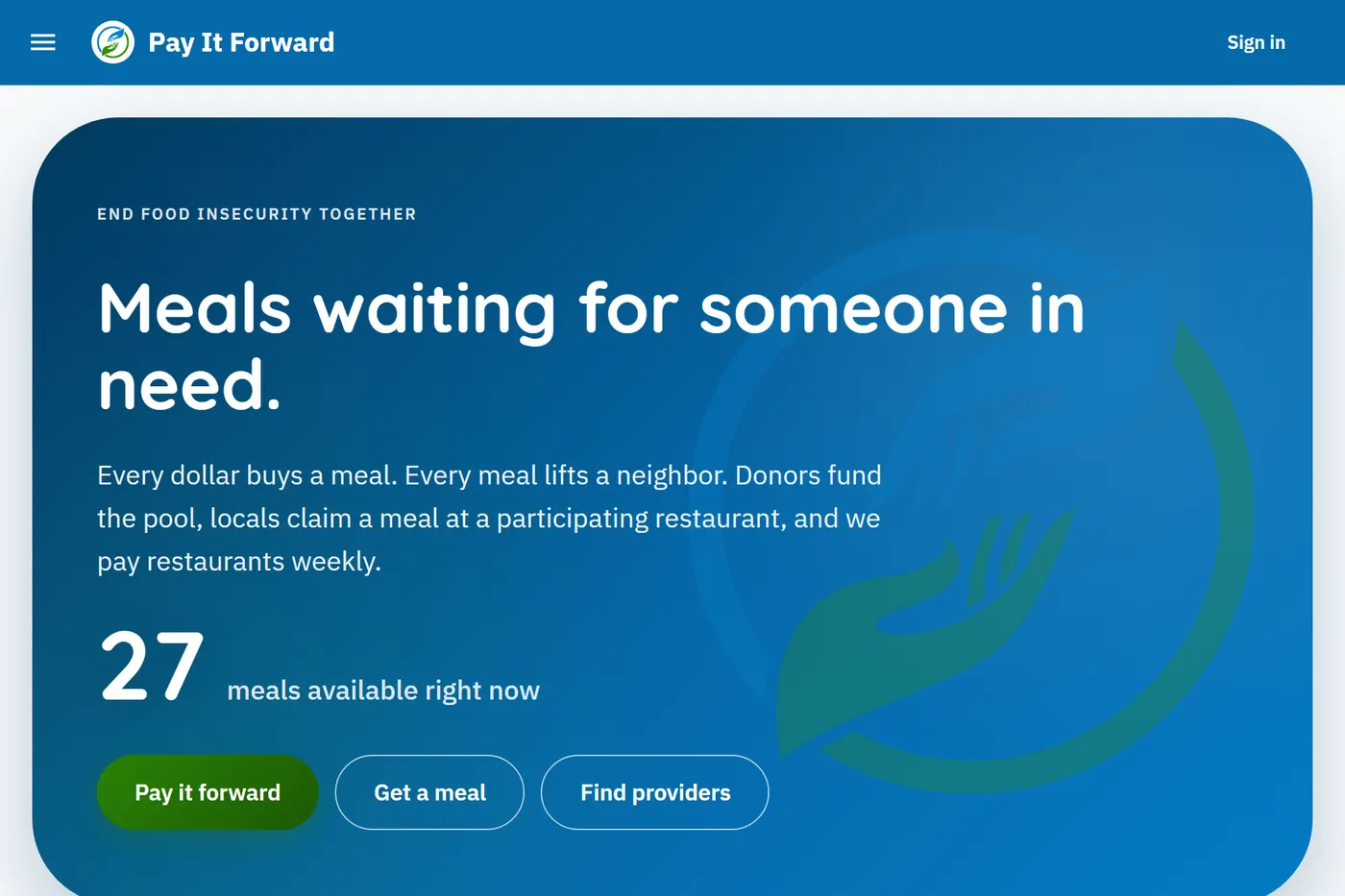
A meal on PIF Board has already been paid for by somebody who will never know who ate it. That is the entire transaction. You find a nearby restaurant, claim a meal, and show up.
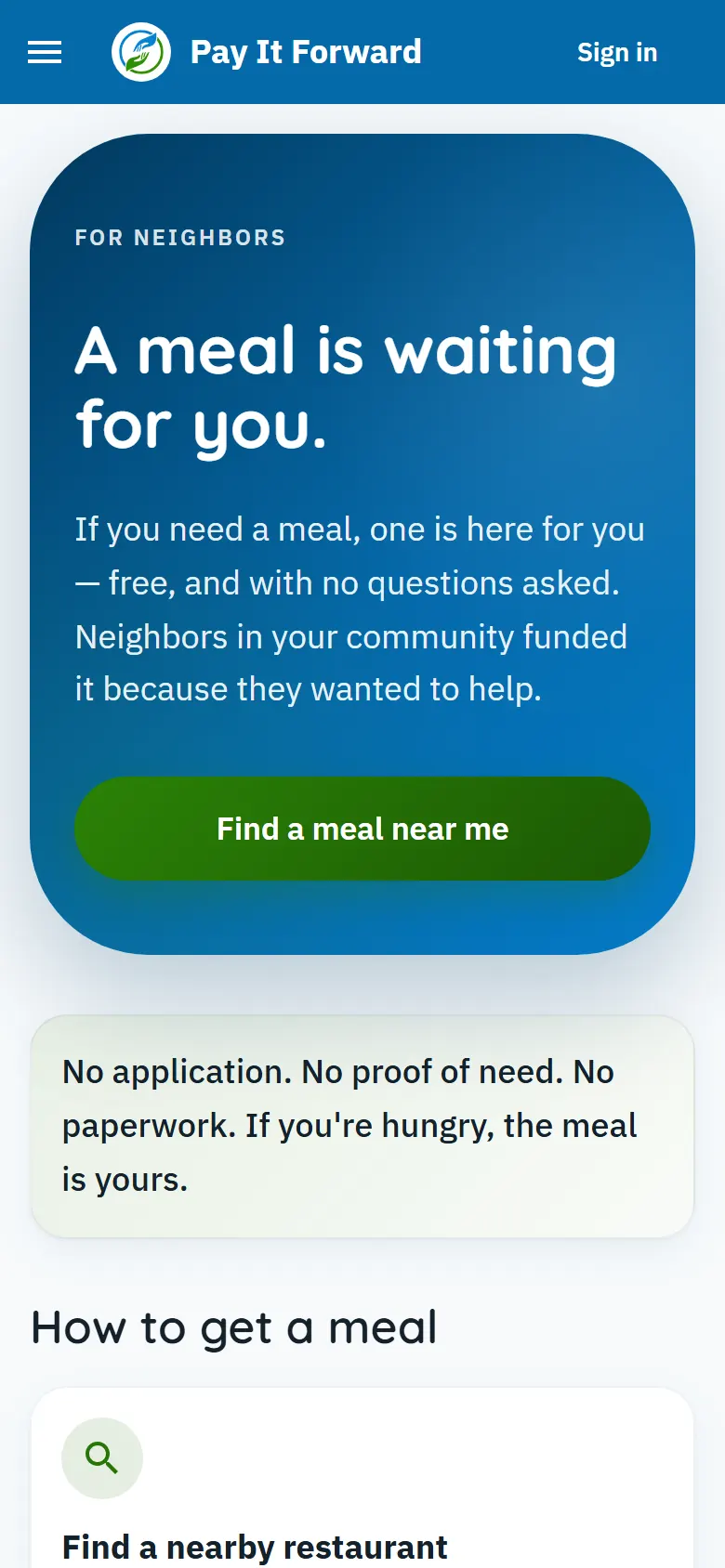
The absence of a conversation is the design, not an oversight in it. A great deal of help arrives with a queue, a form, or a moment where you have to say out loud to a stranger that you cannot afford lunch. That moment is why plenty of help goes unused by people who need it. Taking it out is most of the work.
It also has to work for somebody with no smartphone and no data, which is a real share of the people this is for. That means a partner holding a tablet, or a person at a counter doing it for you, rather than a beautiful app and a shrug.
The part that has to work is the restaurants
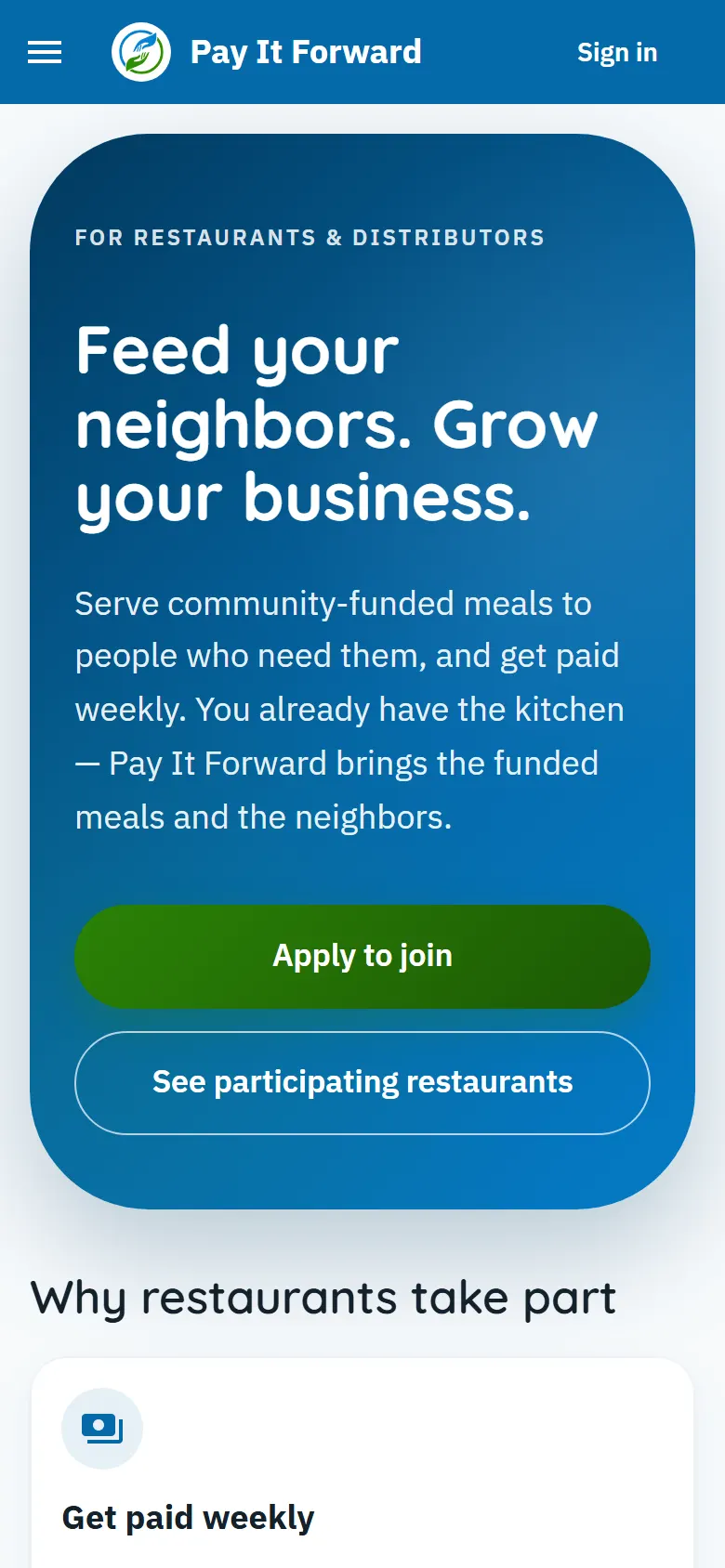
This is the piece I would get wrong if I were reading about it from outside, so it is worth being direct: restaurants are not being asked to donate anything.
A restaurant sets its own price for a meal and its own capacity, serves the meals as claims come in, and gets paid weekly for every one. They already have the kitchen, the staff and the food cost worked out. Asking a small restaurant to absorb free meals is asking the least cushioned business on the street to fund a social programme, and it works for about a month.
Money going to a local kitchen instead of out of the neighbourhood is not a side benefit either. It is the second half of the point.
What we want it to grow into
Pay It Forward now runs as a project of the Foundation for Innovation in Society, a 501(c)(3) based in Phoenix. The 501(c)(3) is the foundation’s rather than Beanchain Coffee LLC’s, so donations through PIF Board are tax deductible to the extent allowed by law, and that is the foundation’s status to claim and not ours.
Through the foundation we have applied to the City of Phoenix for a grant to build a proper Phoenix meal network next year: a set of restaurants across the city being paid for verified meals, community organisations able to claim in bulk and hand meals out through the services people already use, and enough of a record to say exactly what happened to every dollar. We have applied. We have not been awarded anything, and I would rather say that plainly here than let a hopeful sentence do work it has not earned.
The reason to aim at Phoenix is not ambition for its own sake. The city’s own 2030 Food Action Plan counts 43 of Maricopa County’s 55 food deserts inside Phoenix, and finds that close to half of residents live in one. What people told the city they were up against was cost, distance, transport, no time to cook and no equipment to cook with. A ready meal from a restaurant down the road answers most of that list in a way a box of groceries does not, if you have nowhere to store or heat them.
What it needs
Restaurants, mostly. The pool of money is the easy part to fix and the number of kitchens taking part is the thing that decides whether any of this is real. If you run a restaurant anywhere near us, or you know somebody who does, that is the single most useful thing you can do about this.
After that, organisations already working with people who need meals, because a claim code is no use to somebody who never hears the programme exists. Then donors, and honestly in that order.
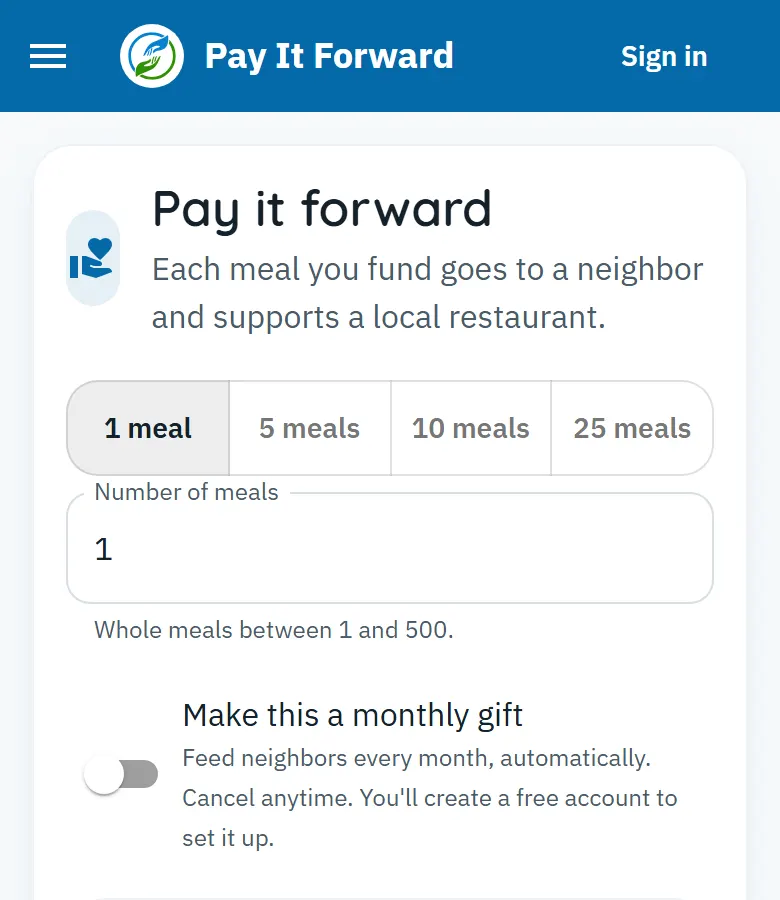
It is early and it is small, and both of those get fixed one restaurant at a time. If you want to put meals in the pool today, that is pifboard.com/donate. If you need one, or you are helping somebody who does, our unhoused help pages list what is available across the East Valley and Phoenix with numbers you can tap to call.
Feeding somebody without making them ask
Stage one of the plan is a coffee shop, handed to the people working in it, written down, then done again somewhere else. Three stages is a long time to wait to be useful to anybody.
This is the piece that needs no plan at all. Somebody buys a meal today and somebody else eats it today, and nothing about that depends on us being right about the rest of it. The argument underneath is the same one that runs through everything else here: people are not poor because they made a mistake, and a business does not have to be built so that somebody loses.